
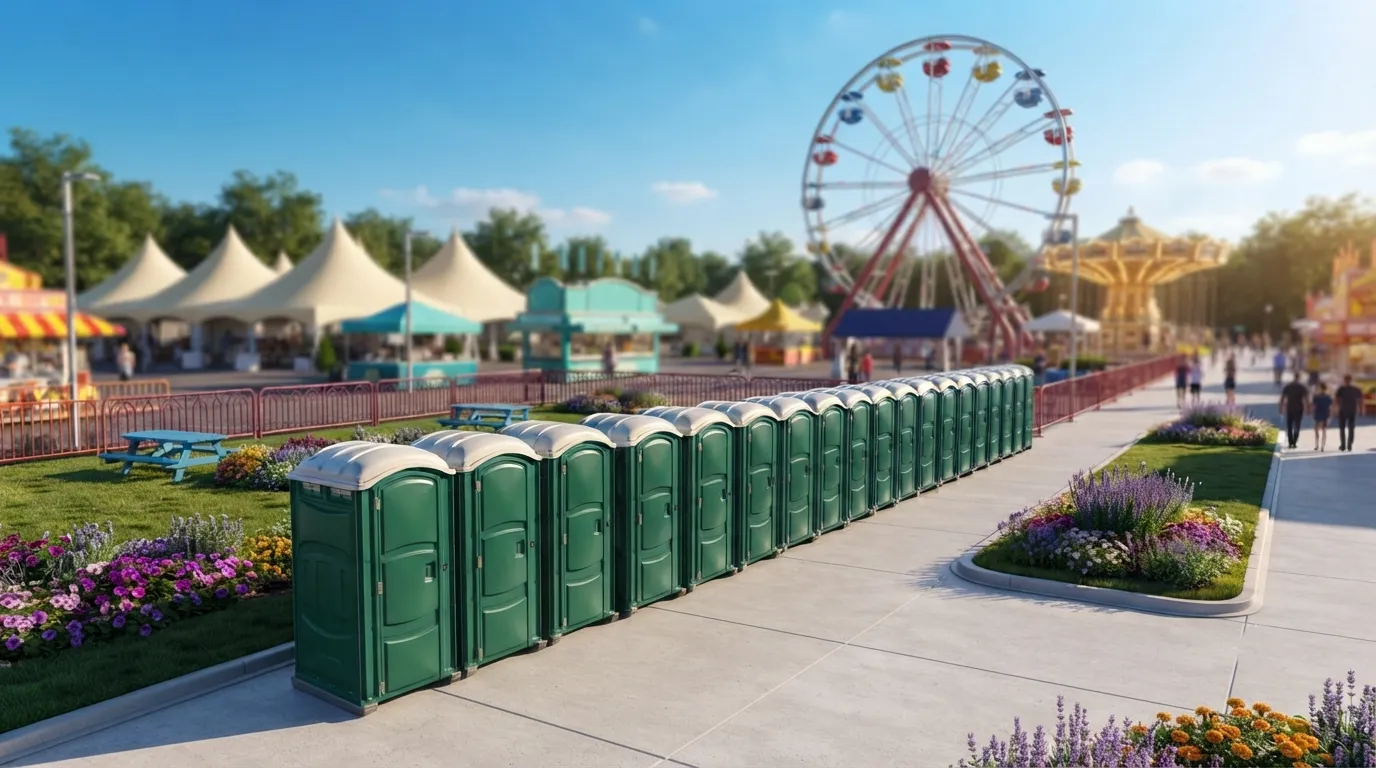
Fair organizers in and around Pittsburgh are juggling more than restroom count. There's parking, vendor power, fencing, trash, and handwashing near the food booths, all on a site that has to get cleared out fast once the gates close. This page walks through what a fair actually needs and where the numbers come from.
How many porta potties does a county fair need?
Start from OSHA's general sanitation ratio and adjust up for a fairground crowd. OSHA 1926.51(c)(1) sets 1 toilet per 20 workers on a jobsite, but a public event with thousands of attendees over a weekend needs a different math than a crew of laborers. Most fair planners in Pittsburgh work backward from expected peak attendance and food vendor count rather than a strict worker ratio. If you're not sure where to start, our guide on how many porta potties you need walks through the attendance-based math, and OSHA portable toilet requirements covers the underlying jobsite standard for any construction or setup crew building the fairground itself.
A three-day fair pulling a few thousand people a day is a different animal than a single afternoon car show. Bigger draws call for deluxe flushable units near main gates and grandstands, with standard units spread through vendor rows and parking fields. For fairs with a beer garden or wine tasting, expect higher turnover per unit and budget extra service visits.
What about ADA access at a fairground?
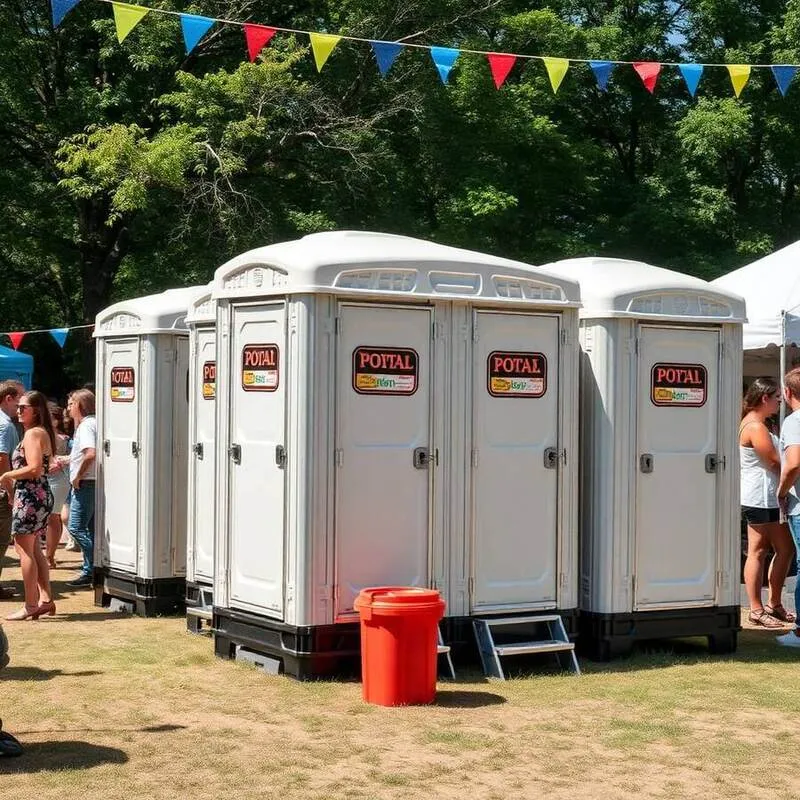
At least one accessible unit is required in any cluster of portable toilets, and the math is specific: ADA Standards section 213.2 requires 5 percent of clustered single-user units to be accessible, with a minimum of one no matter how small the cluster. That means even a modest fair with six or eight standard units needs an ADA accessible porta potty on site, not held in reserve.
The unit itself has to work for someone using a wheelchair or walker, not just carry a sign. ADA Standards section 304.3.1 calls for a 60 inch turning circle inside the unit, and section 404.2.3 sets a 32 inch minimum clear door opening. The route leading to it matters too: section 403.5.1 requires a 36 inch clear path, and on fairground grass or gravel that path needs to meet section 302.1's requirement that ground surfaces stay stable, firm and slip resistant. A porta potty parked on soft turf after a rain doesn't meet that bar. For the full breakdown, see ADA restroom requirements.
Restroom trailers for bigger fairs
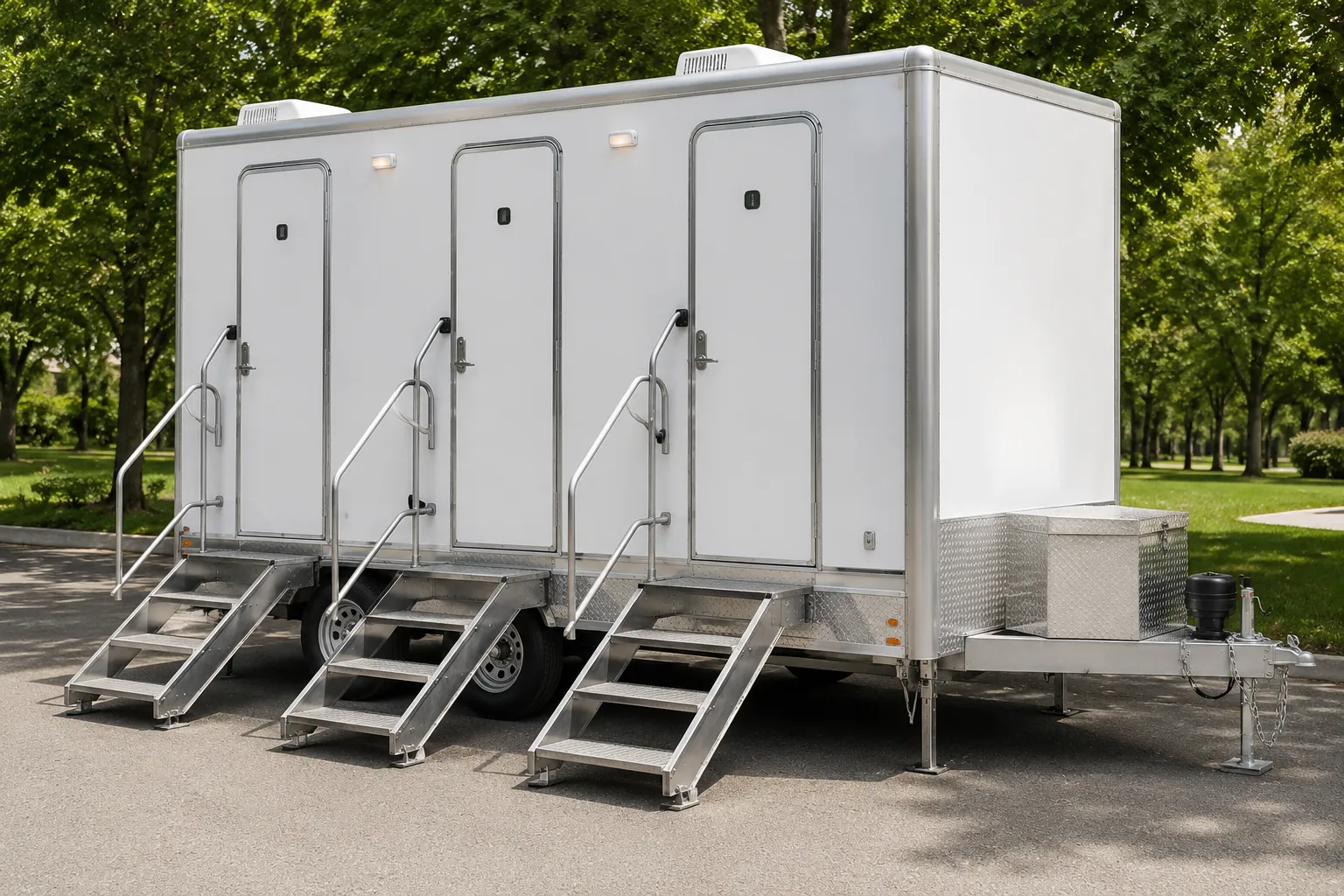
Fairs with grandstands, midway rides, and a beer tent often upgrade to a restroom trailer instead of a bank of standard units. A 2 stall restroom trailer handles a smaller fair or a VIP area; larger draws lean toward a 4 stall or 8 stall restroom trailer near the main gate. Trailer pricing runs wide depending on stall count and event length.
| unit | duration | typical range |
|---|---|---|
| standard toilet | weekend | 125 to 400 |
| standard toilet | event (multi-day) | 200 to 800 |
| ADA unit | weekend | 199 to 300 |
| restroom trailer | weekend | 900 to 3000 |
| restroom trailer | multi-day event | 2499 to 3899 |
Pricing depends on stall count, run of show, and whether the site needs temporary power or a light tower to run water pumps and lighting after dark. See restroom trailer rental cost for the full breakdown, or event restroom rental for a wider look at multi-day event planning.
Do fairgrounds need a handwashing station separate from the toilets?
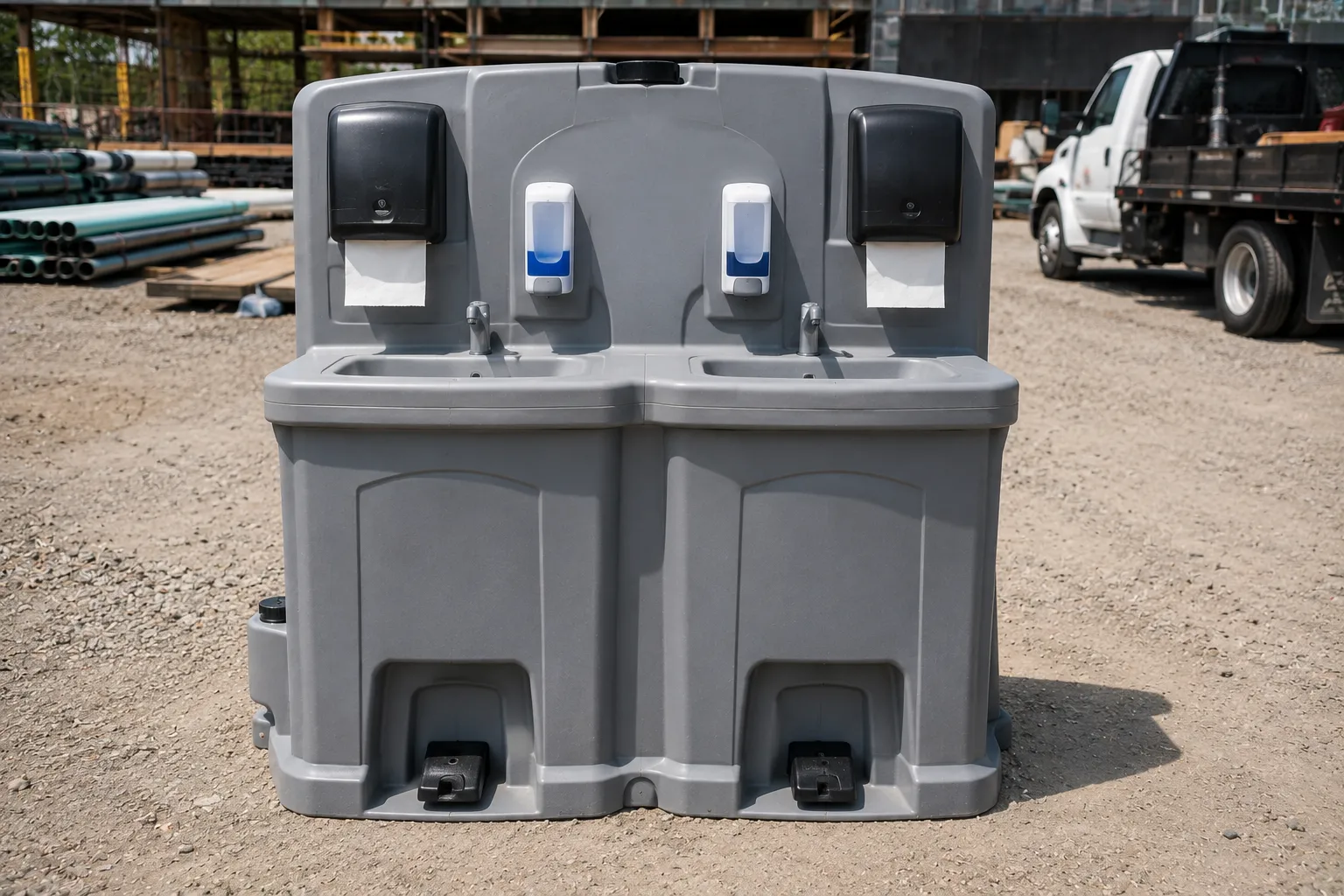
Yes, especially near food vendors. Handwashing near food service is treated separately from toilet counts in most sanitation planning, and 29 CFR 1910.141(d)(2) is specific that soap and towels or a hand dryer are required. Hand sanitizer alone does not satisfy that standard. A row of handwashing stations or portable sinks near the food court keeps vendors compliant and keeps lines away from the actual restrooms. Some organizers add a hand sanitizer station at gate entrances as a supplement, not a replacement. If any part of the setup crew is using paint or coatings on booths or signage, OSHA 1926.51(f)(1) requires washing facilities for that contaminant exposure specifically, separate from the general count.
What about trash, fencing, and site cleanup?
A fairground generates a lot of waste fast, and OSHA 1926.25 covers general housekeeping and debris clearing for any crew setting up structures. Most fairs pair restroom service with a roll-off dumpster, sized to the event. A 10 yard dumpster handles a small local fair; larger county fairs with food vendors and demo booths often need a 20 yard dumpster or bigger. Check dumpster sizes and dimensions and what cannot go in a dumpster before ordering, since cooking oil and certain vendor waste need separate handling.
Crowd flow and vendor perimeters usually call for temporary fencing or crowd control barriers, and OSHA 1926.202 sets the barricade standard construction crews follow when building out a fairground. If the fair is happening on a county park property near Pittsburgh, allow lead time to confirm any right of way or placement rules with the venue directly.
Where do fairs near Pittsburgh usually source these services?
Fairs and community events around Pittsburgh draw from towns like Mount Lebanon, 7.0 miles southwest, and Bethel Park, 11.3 miles south, along with Monroeville, 14.3 miles east. Pittsburgh Porta Pros delivers to fairgrounds across that radius, including sites near Shaler, 8.2 miles north, and Penn Hills, 12.3 miles east. Larger county-scale fairs sometimes run near venues like North Park, an Allegheny County park, where crowd size and layout drive equipment count more than distance does.
Do I need a permit for restrooms at a fairground event?
It depends on whether the fairground sits inside Pittsburgh city limits or on county or private land. Inside the city, placing any obstruction in the public right of way requires a DOMI permit under City Code 416.01, though most fairgrounds sit on dedicated event land, not the street. Confirm placement rules with the venue and, if near a public road, with the City of Pittsburgh Department of Mobility and Infrastructure.
FAQ
How far in advance should I book restrooms for a county fair?
Book as early as you can once headcount and vendor count are set, especially for multi-day fairs needing several trailers or a dozen-plus standard units. Fair season overlaps with wedding and festival season around Pittsburgh, so summer weekends fill fast. See porta potty rental checklist for a full planning timeline.
Can I mix standard units and a restroom trailer at the same fair?
Yes, and it's common. Standard units cover vendor rows and parking fields cheaply, while a trailer sits near the grandstand or VIP area for a nicer experience. Mixing keeps cost down without sacrificing access near high-traffic zones. Check porta potty placement guide for spacing tips.
How often do restrooms get serviced during a multi-day fair?
Service frequency depends on attendance and unit count, but the baseline industry interval under ANSI/PSAI Z4.3 is one visit per week for up to 10 users over a standard 40 hour week. A busy fairground blows past that fast, so most multi-day events add daily servicing. See how often are porta potties cleaned.
Do I need lighting near the restrooms for an evening fair?
Yes, if the fair runs past dusk. OSHA 1926.56(a) sets minimum illumination levels for work areas, and a fairground path leading to restrooms after dark should follow the same logic even though it's not a jobsite. A light tower rental covers restroom paths, food courts, and parking fields.
What size dumpster does a two-day county fair need?
It depends on vendor count and food service volume, but a 20 yard dumpster covers a mid-size fair with several food booths. Smaller single-day events often get by with a 10 yard unit. See dumpster rental cost for pricing by size.
Does a fairground restroom setup need GFCI protection?
If any restroom trailer or light tower is running off generator or temporary power, OSHA 1926.404(b)(1)(ii) requires ground fault circuit interrupter protection on that circuit. This matters most for trailers with pumps and lighting. Ask about temporary power pole setup when booking a trailer.
Next step
Get a delivery date
Tell us the address, the dates and the headcount. We size the order and confirm the route.