
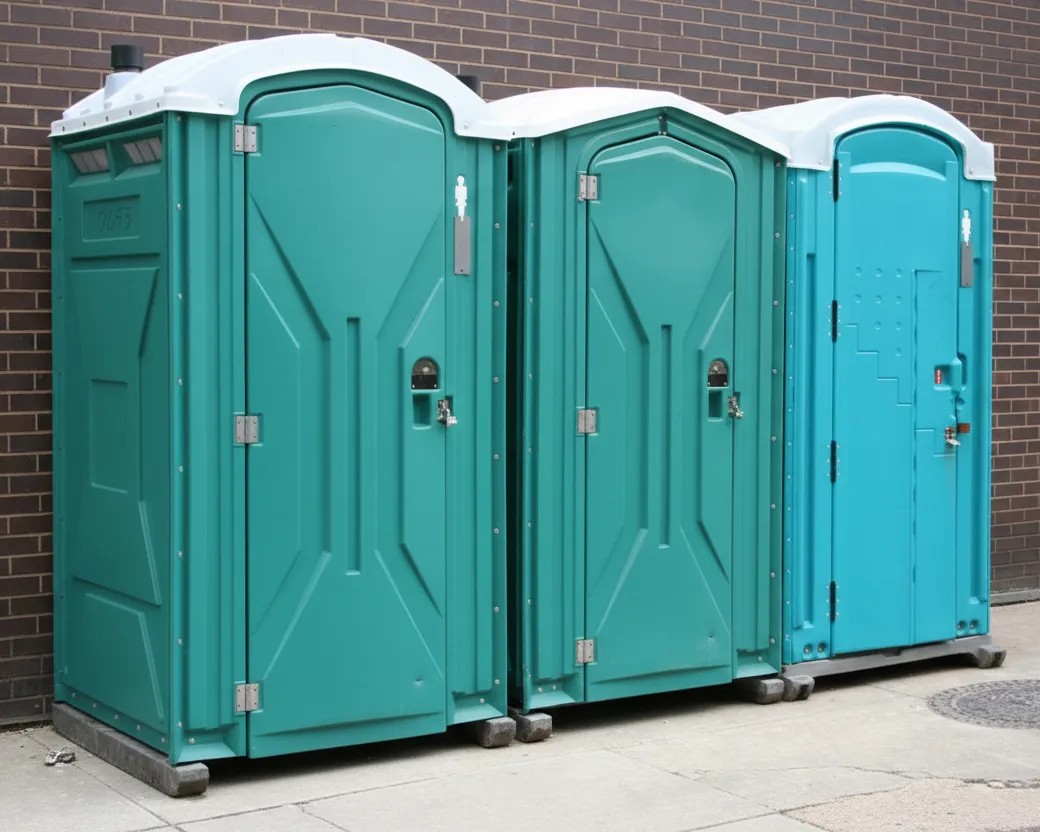
Pittsburgh Porta Pros keeps a fleet of these units moving across the city every week, from Oakland construction sites to backyard decks in Mount Lebanon, 7.0 miles southwest of downtown. A standard unit is the base model of the portable toilet rental world. No bells, no whistles, just a place to go. If you want something nicer, look at the deluxe flushable porta potty or the ADA accessible porta potty for job sites with workers who need one. This page covers what the standard unit is, what it costs, and when it's the wrong call.
What is a standard porta potty?
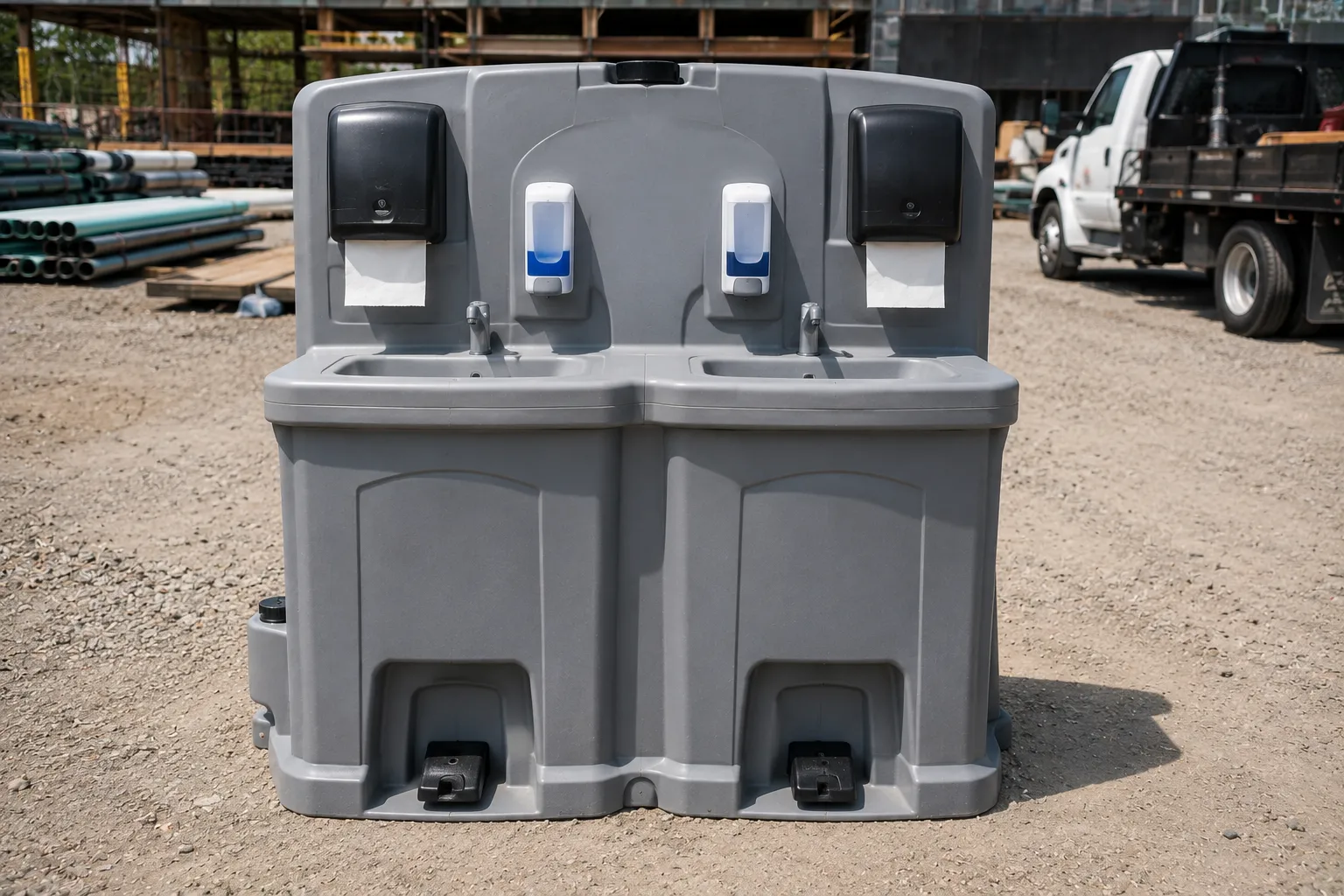
It's a single-stall toilet with a holding tank, a door, and nothing electric or plumbed. Pittsburgh Porta Pros stocks the standard unit with a 60 to 70 gallon holding tank, which is enough for a crew of workers over a normal week between services. It doesn't flush and doesn't have running water, so pair it with a station from handwashing station rental if you need hand cleaning on site.
Some people search for a "basic porta potty rental" or a "porta john rental" and mean the exact same thing. Pittsburgh Porta Pros calls it standard because it's the base spec, not because it's lacking. It's the unit contractors order by the dozen for construction site services, and it's the same unit that shows up at a backyard reno covered under home renovation porta potty.
Standard porta potty dimensions and size
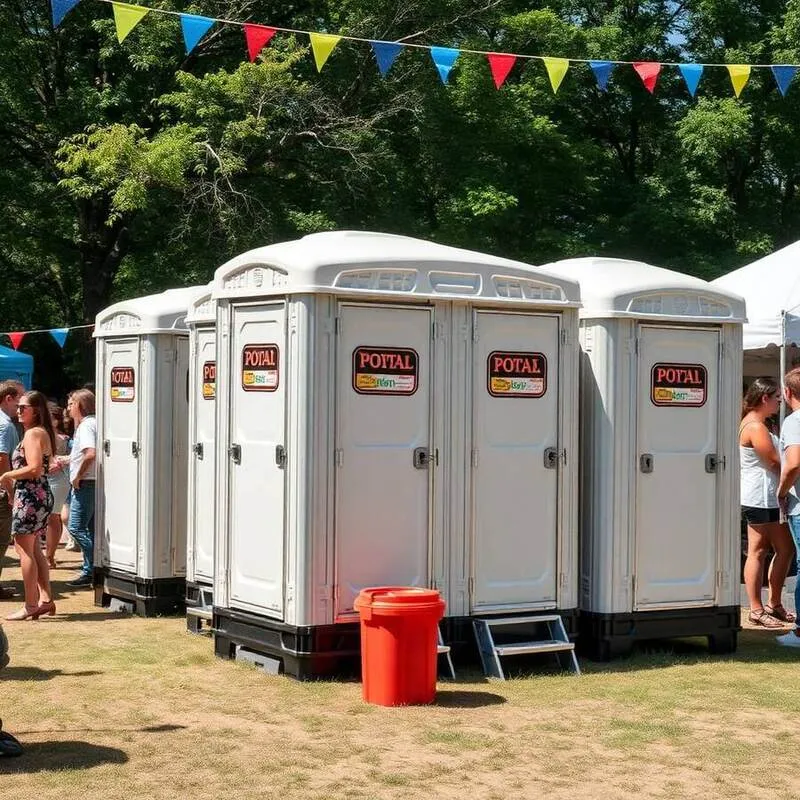
A standard unit is about 44 by 48 inches on the ground and stands roughly 92 inches tall. That's small enough to fit in a driveway, a job site corner, or a tight urban lot, but it still needs a flat, stable spot. On a steep Pittsburgh lot, especially anywhere near the South Side Slopes or Troy Hill where the city's own Citywide Steps Assessment counts more than 800 sets of public steps in the right of way, placement gets tricky fast. Check the porta potty placement guide before you commit to a spot, because a unit set on a slope or gravel bed will lean, and nobody wants that mid-use.
If your job needs wheelchair access, the standard unit isn't built for it. ADA Standards section 304.3.1 calls for a 60 inch turning circle, and a standard footprint doesn't come close. That's what the ADA accessible porta potty is for, and ADA Standards section 213.2 says at least 5 percent of a cluster of units, and never fewer than one, needs to be an accessible model anyway.
Standard porta potty rental cost in Pittsburgh
Pricing depends heavily on how long you need the unit and how far Pittsburgh Porta Pros has to drive to deliver it. Here's the general band based on measured rental data:
| Duration | Low | Typical | High |
|---|---|---|---|
| Day | $100 | $150 | $350 |
| Weekend | $125 | $250 | $400 |
| Week | $130 | $200 | $500 |
| Month | $125 | $200 | $325 |
| Event | $200 | $400 | $800 |
Delivery is usually billed separately, and that fee runs from about 50 dollars on the low end for a weekly rental up to 500 dollars for same-day service, depending on distance and urgency. For a full cost breakdown across unit types, see porta potty rental cost, or if you're renting by the day specifically, check porta potty rental per day. Long jobs should look at monthly porta potty rental, since the per-day cost drops a lot once you're past a few weeks.
How many standard units does a job site need?
OSHA 1926.51(c)(1) sets the baseline: one toilet facility for 20 or fewer construction workers, then one toilet seat and one urinal per 40 workers once you're above 20, and one per 50 once the crew hits 200 or more. That's a legal minimum, not a comfort number, and most foremen order more once they see how long the line gets at lunch. Run your numbers through the how many porta potties do I need guide, and if you want the OSHA rules laid out in full, see OSHA portable toilet requirements.
Agricultural operations follow a different rule. OSHA 1928.110 requires field sanitation for hand-labor employees at one facility per 20 workers, within a quarter mile walk, which matters for anyone running a farm and agricultural restrooms setup outside the city proper.
Do I need a permit for a standard porta potty in Pittsburgh?
Probably, but the exact permit type isn't published. Pittsburgh City Code Title Four, Article I, Chapter 416 requires a permit from DOMI, the Department of Mobility and Infrastructure, before placing any obstruction in the public right of way, under section 416.01. A standard porta potty sitting on a sidewalk or street counts as an obstruction. What isn't spelled out anywhere in the city's Right of Way Procedures Manual is a specific permit type for a standalone toilet, unlike the named Construction Staging Permit for demolition dumpsters. If your unit sits entirely on private property, this usually isn't an issue, but confirm placement with the city before you set anything in the street or sidewalk. More detail is in porta potty permit requirements and the broader dumpster permit requirements page covers the parallel dumpster process for comparison.
Where do standard units get used most in Pittsburgh?
Construction sites lead the list. The city issued 9,158 permits in 2025, including 4,133 Building and Development Applications and 139 demolition permits, and most of those jobs need sanitation on site. Oakland is especially active right now with large announced institutional projects. Beyond construction, standard units show up at weddings through wedding restroom rental, at races along the marathon and race restrooms route each May, and at park events near Schenley Park or Frick Park under event restroom rental and festival restroom rental.
Should I rent a standard unit or upgrade to a trailer?
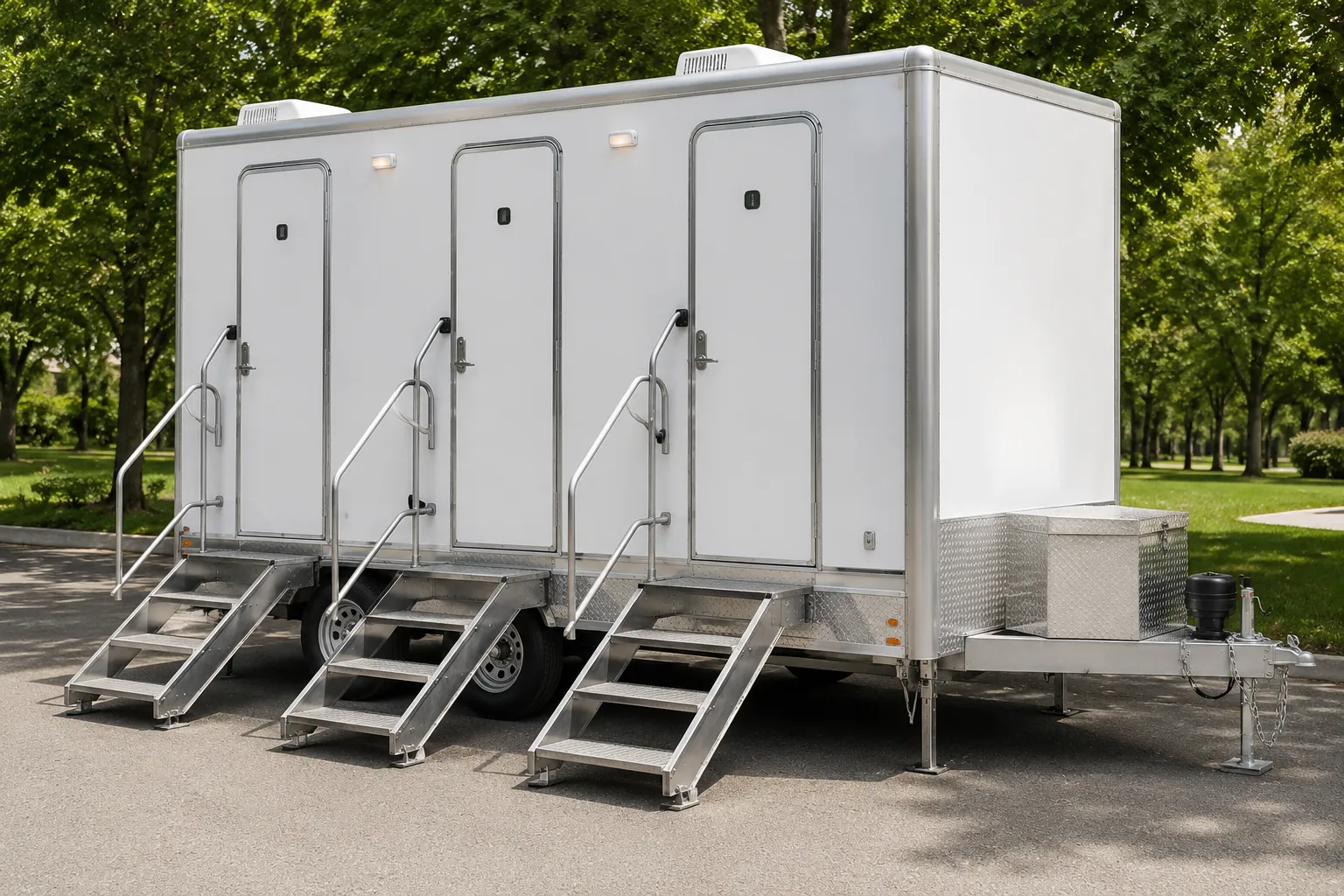
Rent standard units for job sites, short events, and budget-driven projects. Upgrade to a restroom trailer rental for weddings, VIP events, or any job where guests expect real fixtures. A trailer costs a lot more, from 175 dollars a day up into the thousands for weekend and event rentals, so it only makes sense when the audience or client expects it.
Winter rental in Pittsburgh
Pittsburgh averages 113.6 days a year at or below freezing and 44.1 inches of snow annually, so winter rentals need antifreeze in the tank and a realistic delivery window around snow events. See porta potty in winter for what changes when temperatures drop.
How much does a standard porta potty rental cost per day in Pittsburgh?
Daily rentals run 100 to 350 dollars depending on how long the unit stays and how far it has to be delivered. Short one-day rentals sit at the higher end of that range because delivery and pickup both happen the same day, which adds labor cost per unit.
What's the difference between a standard and a deluxe porta potty?
A standard unit has no sink or flush, just a toilet and a holding tank. A deluxe unit typically adds a flush mechanism and sometimes a small sink, and costs more, from 85 dollars a day up to several hundred. See deluxe flushable porta potty for specs.
How often does a standard porta potty get serviced?
The industry baseline under ANSI/PSAI Z4.3 is one service visit per week for up to 10 users over a 40 hour week. High-traffic sites or events need more frequent service. Details are on how often are porta potties cleaned.
Can I place a standard porta potty on the street in Pittsburgh?
Only with a permit. Pittsburgh City Code 416.01 requires a DOMI permit before placing any obstruction, including a toilet, in the public right of way. Placement entirely on private property generally avoids this requirement, but confirm with the city if you're unsure where your property line falls.
Do standard porta potties smell?
Less than people expect if service intervals are kept up. Odor control depends on tank capacity, usage volume, and how often the unit gets pumped and treated. Full explanation is on do porta potties smell.
How far in advance should I book a standard unit near me?
Book at least a few days ahead for standard delivery, longer during peak construction season or around major events like Picklesburgh or the Three Rivers Arts Festival. Emergency same-day delivery is available but costs more; see emergency porta potty rental for that option.
Is a standard unit enough for a residential renovation project?
Usually, yes. One standard unit covers a small crew for the length of most home projects. If the crew grows past a handful of workers, OSHA 1926.51(c)(1) ratios kick in and you may need a second unit. See home renovation porta potty for typical setups.
Next step
Get a delivery date
Tell us the address, the dates and the headcount. We size the order and confirm the route.