
Where can a porta potty legally go in Pittsburgh?
Two zones exist: private property and the public right of way. On private property, you mostly just need firm, level ground and truck clearance. Step into the street, sidewalk, or a parking lane, and Pittsburgh City Code Chapter 416, Obstructions, applies. Section 416.01 says a permit or license from the Director must be obtained before placing any obstruction in the right of way. That covers dumpsters, fencing, and by extension a standalone toilet parked at the curb, though no specific permit type is named for porta potties in the porta potty permit requirements that DOMI's manual actually lists.
If you're planning a construction site services job anywhere near the curb, treat the toilet the same as you'd treat a roll-off dumpster rental: assume you need to check with the city before you set it down. Section 416.02(a) lets the Director refuse a permit if the obstruction would materially interfere with traffic flow or create a dangerous condition, so a unit blocking a crosswalk or a bus stop gets rejected outright.
Dumpster placement permit cost and what it tells you about porta potty rules
Pittsburgh does name a specific permit for a dumpster in the right of way: the Construction Staging Permit, Demolition Dumpster work type, filed through OneStopPGH. It runs a base fee of 135 dollars at application plus 60 dollars at issuance, an extension fee of 40 dollars, and a major obstruction fee of 280 dollars for anything longer than 18 days. That permit allows placement for up to 42 days, and DOMI's own guidance says to put the container in a parking lane whenever possible. See the full breakdown on dumpster permit requirements and general dumpster placement permit costs.
No equivalent line item exists for a porta potty. That's a real gap, not an oversight on our part. What is verified is that 416.01's general obstruction rule applies to anything sitting in the right of way, toilet included. If your unit stays on private property, none of this matters and you skip straight to physical placement. If it has to sit at the curb for a home renovation porta potty project with no yard, call DOMI before delivery day, not after.
How much clearance does delivery actually need?
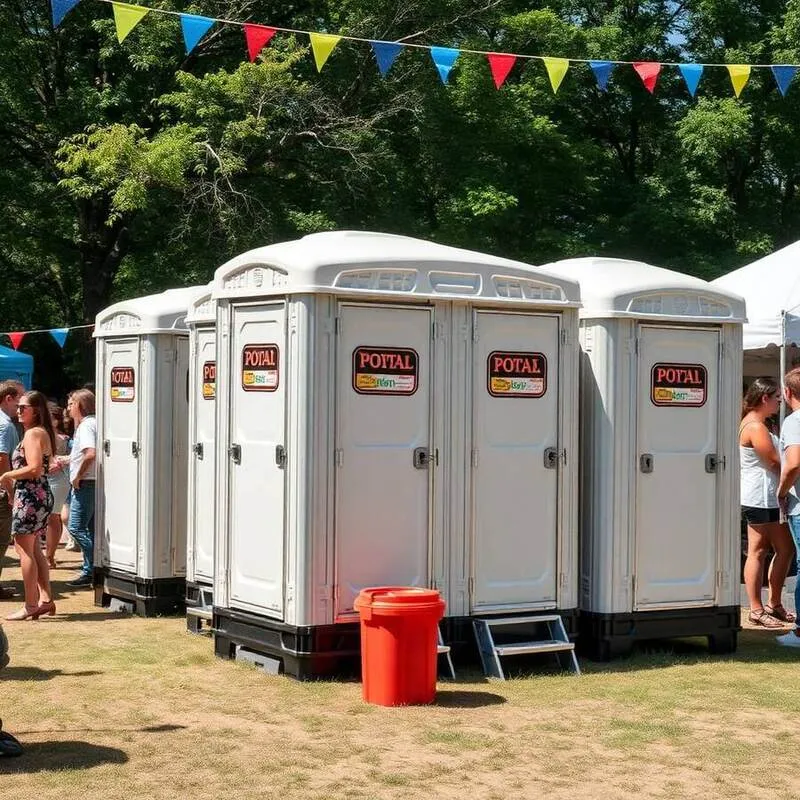
A standard unit runs about 44 by 48 inches on the ground and stands roughly 92 inches tall, so it fits in tighter spots than people expect. The truck is the constraint, not the toilet. A roll-off dumpster rental delivery needs about 60 feet of straight clearance behind the truck, and porta potty delivery trucks want similar room to back in and level the unit, with the same 60 foot clearance rule of thumb applying. That's a real problem in a city with Pittsburgh's terrain.
Pittsburgh's own Citywide Steps Assessment counts more than 800 sets of city steps and over 45,000 individual steps, concentrated in the South Side Slopes, Oakland, Greenfield, the Hill District, and Troy Hill. In those neighborhoods, the legal frontage of a property is sometimes a staircase, not a driveable street, which means a service truck can't reach the address it's numbered on. If you're in one of those pockets, talk to us before you commit to a spot; our porta potty placement guide planning call catches this before delivery day, not on it.
Do ADA rules change where you can put a unit?
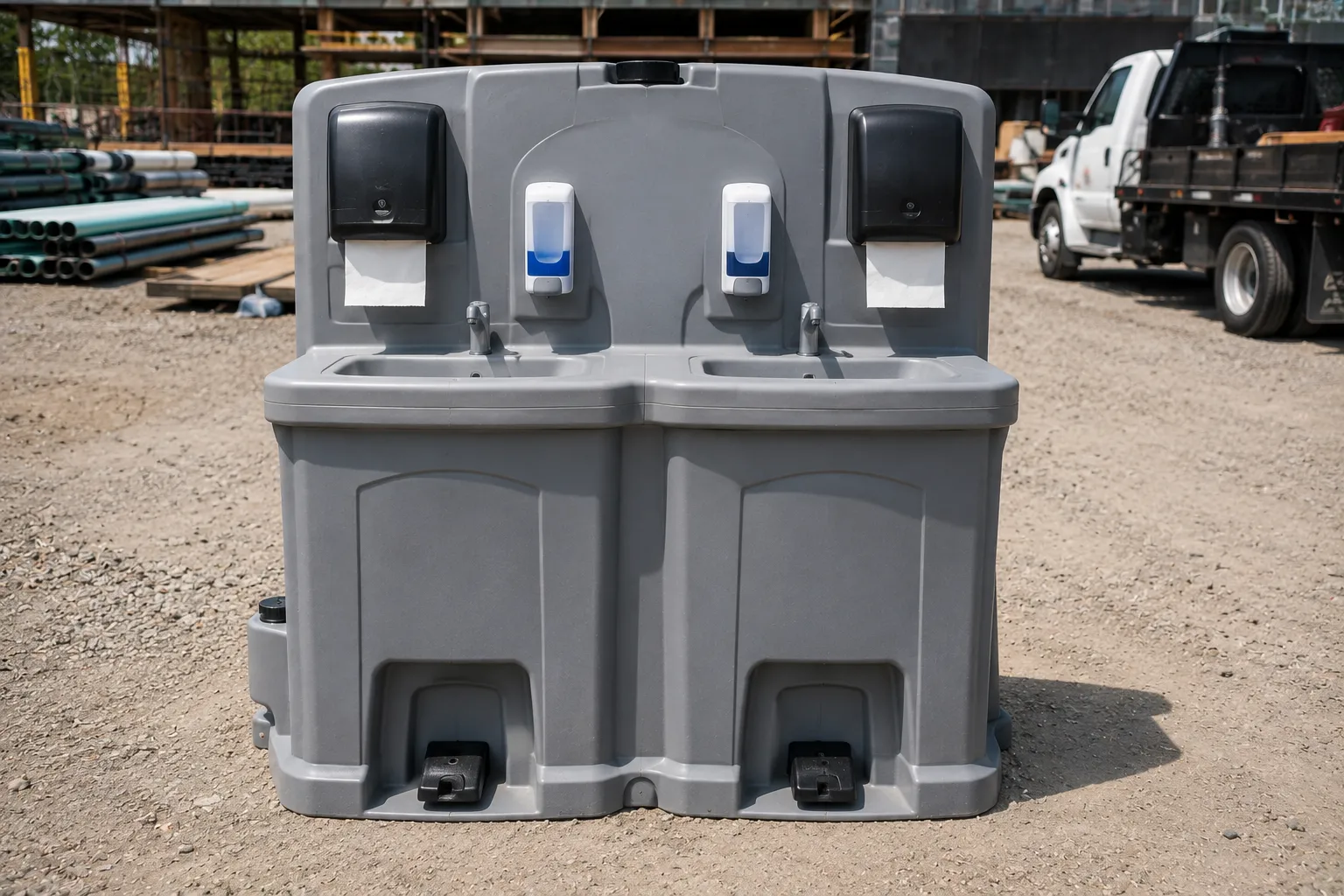
Yes, if you're clustering units. ADA Standards section 213.2 requires at least 5 percent of clustered single-user toilets to be accessible, and never fewer than one. An ada accessible porta potty needs a 60 inch turning circle per section 304.3.1, a 36 inch clear route per section 403.5.1, and a door opening at least 32 inches wide under section 404.2.3. That means more flat ground than a standard unit needs, which matters on Pittsburgh's hillside lots. Section 302.1 also requires the surface itself to be stable, firm, and slip resistant, so gravel that shifts underfoot doesn't pass even if it's level.
What ground conditions rule out a spot?
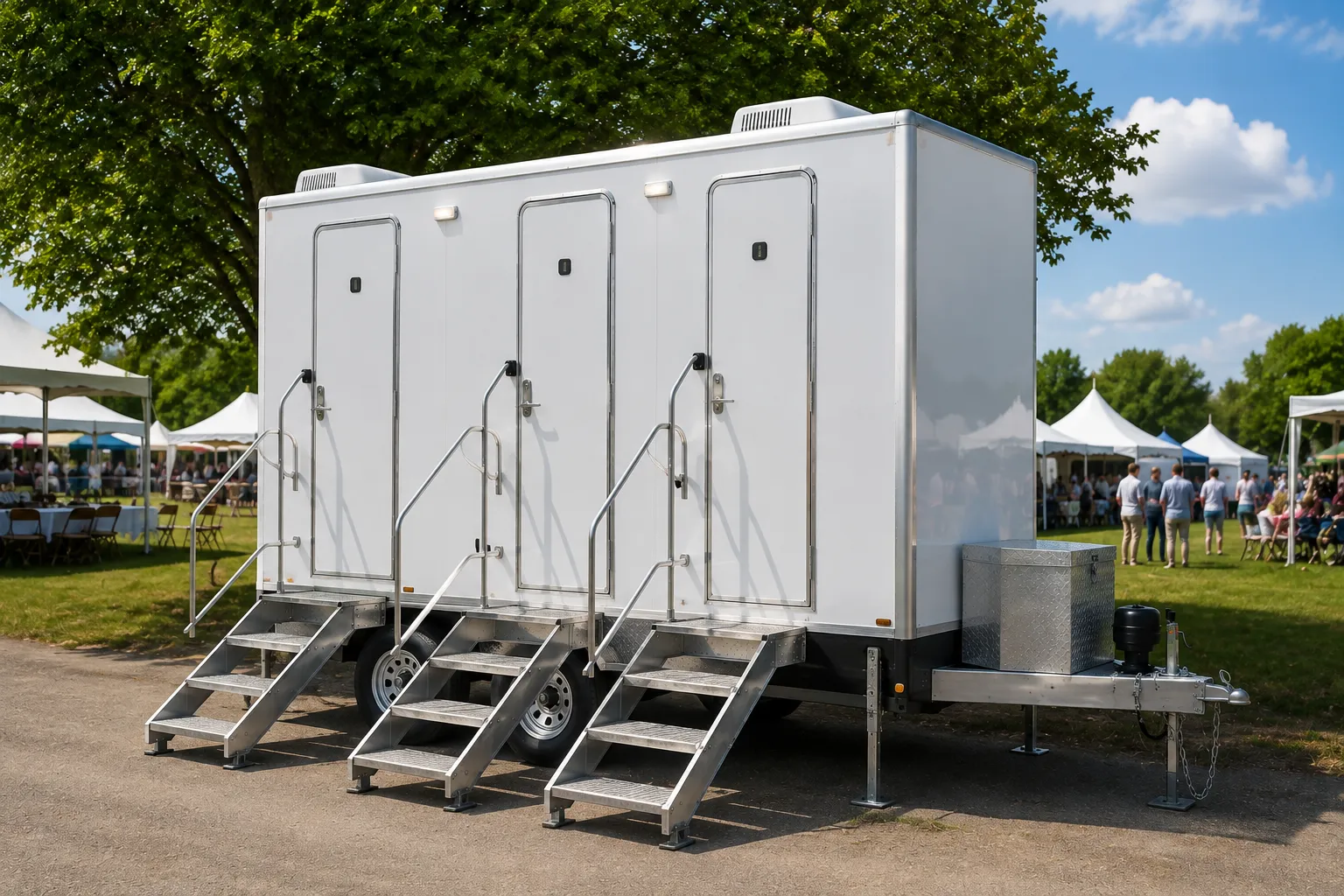
Slope, softness, and overhead lines are the three killers. Pittsburgh's zoning code has a dedicated H Hillside district plus a Landslide Prone Overlay and an Undermined Area Overlay tied to historic coal mining, and while that's a zoning classification and not a placement rule for a rented toilet, it's a fair signal that ground stability is a live issue here. Soft ground after rain, and Pittsburgh averages 39.61 inches of precipitation a year, can tip a unit or sink a leg. If you're setting up a festival restroom rental or an event restroom rental on turf, plan for plywood pads under the feet.
Where should units sit relative to worksite crews?
OSHA 1926.51(c) sets the ratio: one toilet facility for 20 workers or fewer, then one seat and one urinal per 40 workers up to 200. Placement should put the unit within reasonable walking distance of the crew, not tucked behind a dumpster or a materials pile. If you're staging a temporary fence rental perimeter, keep a gap at the toilet zone so foot traffic doesn't get boxed in. Pair units with a handwashing station rental nearby; general sanitation under 1926.51(a)(1) also requires potable water on site, and if crews are applying paints, coatings, or insecticides, 1926.51(f)(1) requires washing facilities specifically for that contamination.
Unrelated searches turn up things like ozark river portable sink replacement parts, mobile office trailer replacement doors, or a placerville septic pumping service, and none of that applies here. If a sink on your portable sink rental unit needs a part, or a mobile office trailer rental door needs replacing, that's a maintenance call to us, not a placement question, and Placerville is 2,300 miles from Pittsburgh.
How far in advance should I schedule placement?
Book at least a few days out for standard jobs, longer for anything needing a DOMI permit. Right of way permits take processing time, and the No Parking sign that comes with a dumpster permit must post 48 hours before the period starts. The same lead time is smart for a curb-adjacent porta john rental.
Can I move a unit myself once it's placed?
No. Units are heavier than they look once the tank has waste in it, and moving one yourself risks a spill and voids the service schedule. Call us to relocate it. This applies to standard porta potty rental units and deluxe flushable porta potty units alike.
Does a residential driveway placement need a permit?
No, private property placement in Pittsburgh doesn't trigger Chapter 416, which only governs the public right of way. A driveway or backyard spot for a home renovation porta potty just needs level, stable ground and truck access, no DOMI paperwork involved.
What happens if a unit sits in the right of way after a permit expires?
The city can issue a citation and fines. That rule is explicit for dumpster permits under Chapter 416 and it's reasonable to assume the same enforcement applies to any obstruction, toilet included. Keep our office updated on your end date so we pull the unit before it becomes a compliance problem.
How many units do I need before placement even matters?
Start with OSHA 1926.51(c): one unit per 20 workers. Our how many porta potties do i need guide walks through the math for larger crews and multi-day events, and once you know the count, placement spacing follows from there.
Do parks and event venues have their own placement rules?
Some do. Point State Park is a Pennsylvania DCNR state park that publishes its own Special Event Guidelines, and Schenley Park, Frick Park, and Highland Park fall under Pittsburgh Parks Conservancy oversight. Check with the venue directly for a wedding restroom rental or concert restroom rental booking before you finalize a spot.
Can placement change once winter hits?
Yes. Pittsburgh sees about 113.6 freeze days a year and 44.1 inches of average snowfall, so a spot that drains fine in summer can ice over. See porta potty in winter for how we adjust placement and servicing when temperatures drop below freezing for months at a stretch.
Next step
Get a delivery date
Tell us the address, the dates and the headcount. We size the order and confirm the route.