
Pittsburgh Porta Pros put this list together from the questions people actually ask before delivery day, not the ones a generic guide assumes you'll ask. Whether you're planning a backyard build in Mount Lebanon, 7.0 miles southwest of downtown, or staging a demolition dumpster next to a standard porta potty rental on the South Side, the order of operations barely changes. Skip a step here and the truck shows up to a spot it can't reach, or worse, a spot the city fines you for.
What do I need to know before I book?
Know your headcount, your rental length, and your site's ground surface before you call. A crew of 15 for six weeks needs different math than a wedding for 80 guests over one weekend, and Pittsburgh's hills mean the flat pad you picture in your yard might actually run downhill toward a storm drain. Get this wrong and you're rescheduling delivery.
Start with worker or guest count. OSHA 1926.51(c)(1) sets the construction ratio at one toilet for 20 workers or fewer, stepping up to one toilet and one urinal per 40 workers once you cross that line. If you're planning a big weekend crew and unsure how many units that means, the how many porta potties do i need guide walks the math, and the full OSHA portable toilet requirements page covers the ratio in detail. Event organizers should look at the same logic through the event restroom rental page, since guest counts behave differently than shift-based crews.
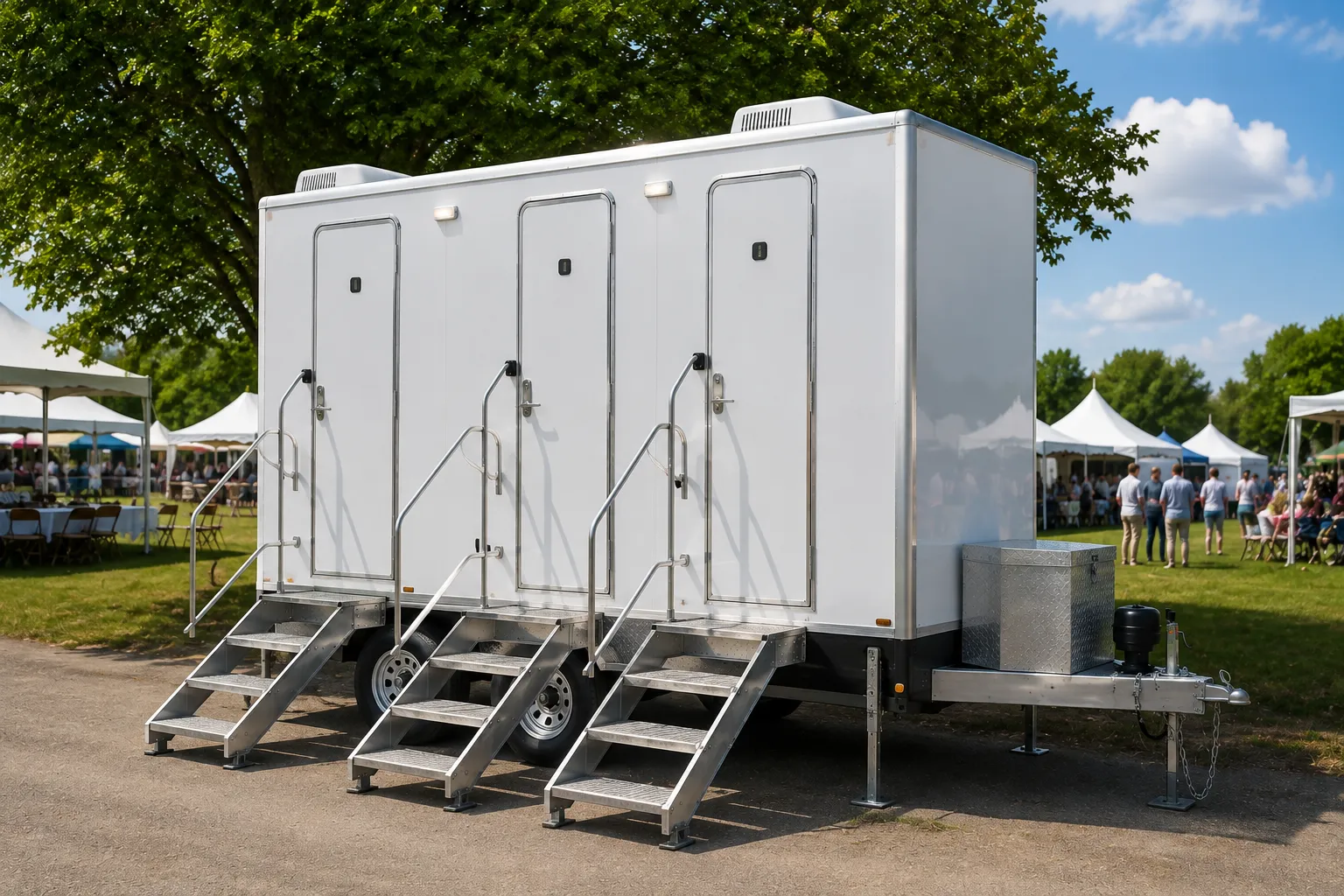
Next, decide on unit type. A standard porta potty rental covers most job sites. A deluxe flushable porta potty suits weddings and office crews who want a step up. If anyone on site uses a wheelchair, you need an ADA accessible porta potty, and ADA Standards section 213.2 requires that at least 5 percent of clustered single-user units be accessible, with a minimum of one no matter how small the cluster. For anything larger than a handful of units, a restroom trailer rental or a 4 stall restroom trailer might make more sense than a row of single units.
Where should the unit go?
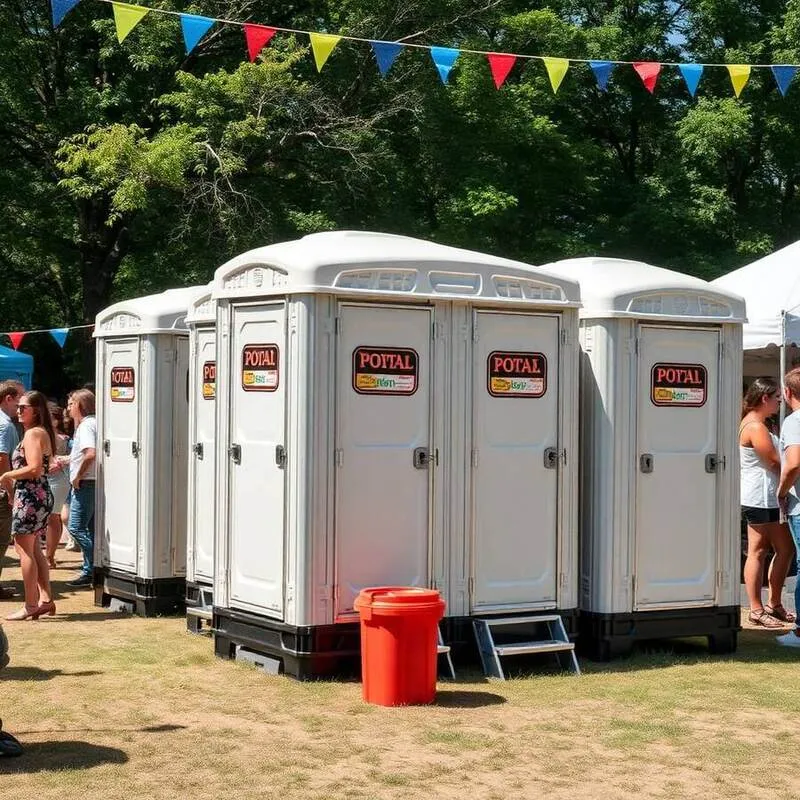
Pick flat, stable ground within reach of the delivery truck, at least 36 inches wide for the access path, and clear of a curb, meter, or slope that could tip a full tank. ADA Standards section 302.1 requires the ground surface be stable, firm, and slip resistant, which rules out gravel that shifts or turf that pools water after rain.
Pittsburgh's terrain makes this harder than it sounds. The city has more public staircases than any other in the country, with over 800 sets and more than 45,000 individual steps built right into the right of way network. In neighborhoods like the South Side Slopes, Oakland, Greenfield, the Hill District, and Troy Hill, a property's legal frontage can be a staircase instead of a driveable street, which means the truck can't get anywhere near the address on paper. Check this before delivery day, not the morning of. The porta potty placement guide covers ground clearance and slope in more depth, and if you're staging near a curb or narrow street, review porta potty permit requirements first.
If your unit needs to sit in the public right of way, on a sidewalk, in a parking lane, or anywhere obstructing normal street use, City Code 416.01 requires a permit from the DOMI Director before you place anything there. No permit type is specifically named for a standalone portable toilet, so confirm directly with DOMI which application applies to your situation rather than guessing. That's a different track from the Construction Staging Permit used for demolition dumpsters, which does name a specific work type and runs through the OneStopPGH portal for up to 42 days. If you're renting a dumpster alongside your restroom units, the dumpster permit requirements page walks through that process, and construction dumpster rental covers container sizing.
How much clearance does the delivery truck need?
Give the truck about 60 feet of straight clearance behind where it parks to unload a roll-off, and a comparable clear path for a portable restroom delivery. Narrow alleys, tight driveways, and street parking all eat into that number fast, especially on the blocks near Schenley Park or Point State Park where event crowds and vehicle traffic already compete for space.
For events at fixed venues, this planning shifts earlier. Point State Park, the 36-acre DCNR state park at the confluence of the three rivers, publishes its own Special Event Guidelines, and organizers running anything near the Pittsburgh Vintage Grand Prix route through Schenley Park in July should coordinate placement well before race week. The same applies to Picklesburgh in July or the Dollar Bank Three Rivers Arts Festival in June, both centered downtown where curb space runs tight. See the festival restroom rental and concert restroom rental pages for venue-specific placement notes, and the marathon and race restrooms page if you're planning around Pittsburgh Marathon Weekend in May.
What else belongs on the checklist?
| Checklist item | Why it matters |
|---|---|
| Confirm headcount | Sets unit count under OSHA 1926.51(c)(1) |
| Confirm rental length | Daily, weekly, and monthly rates differ, see porta potty rental per day |
| Check ground clearance | 36 inch path minimum per ADA 403.5.1 |
| Check for permit needs | City Code 416.01, DOMI right of way rule |
| Confirm water access | Handwashing needs soap and towels under 29 CFR 1910.141(d)(2) |
| Plan for winter | Freeze protection matters below 32 F, common 113.6 days a year here |
| Add handwashing | Required near paint, coating, or pesticide work under OSHA 1926.51(f)(1) |
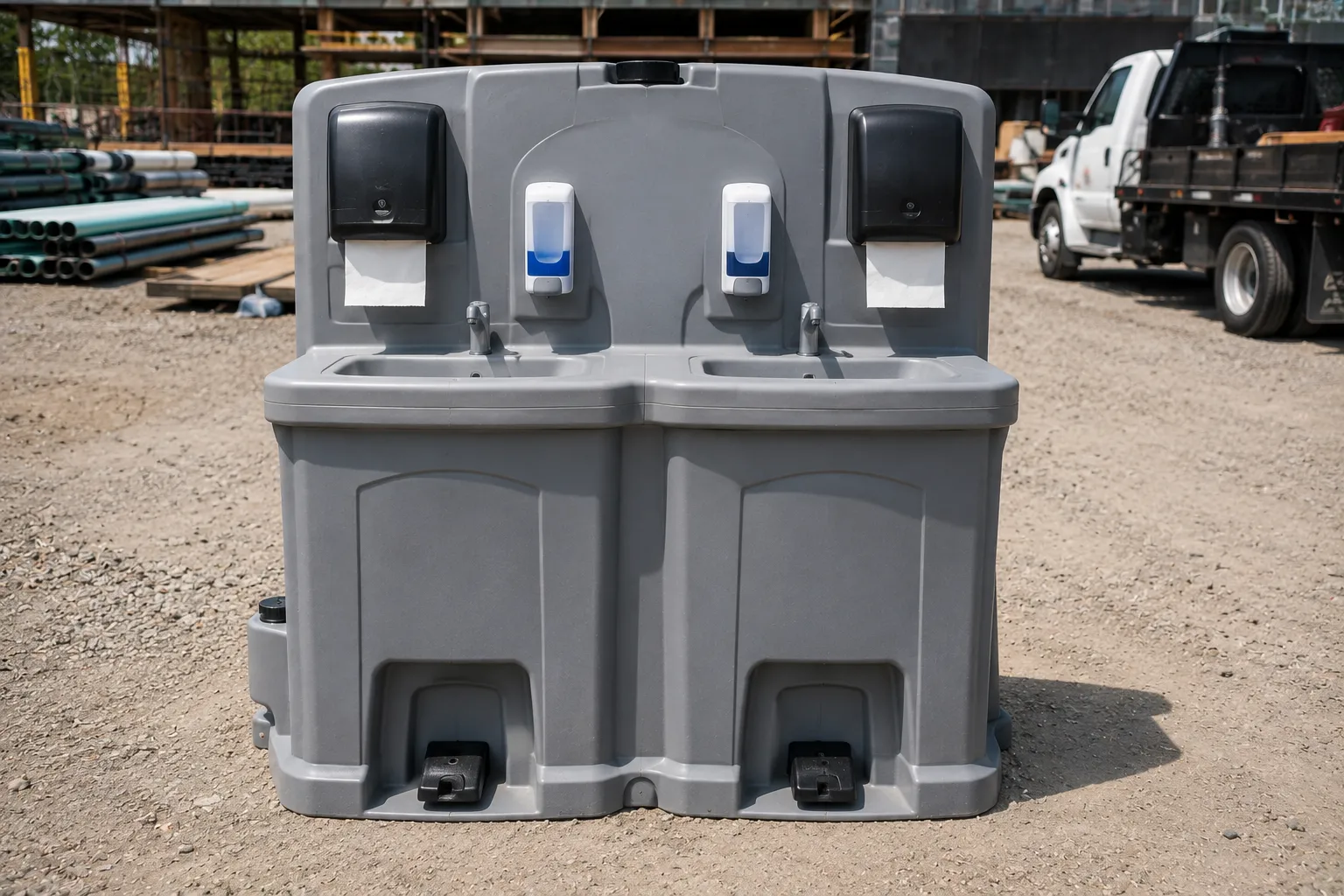
Add a handwashing station if your crew works with paint, coatings, herbicides, or insecticides. OSHA 1926.51(f)(1) requires washing facilities specifically in that context, and a handwashing station rental or portable sink rental satisfies it. Hand sanitizer alone doesn't meet 29 CFR 1910.141(d)(2), which calls for soap and towels or a drying device. If you're unsure what's required for your job, the handwashing station requirements page breaks it down.
Winter changes the checklist too. Pittsburgh averages 44.1 inches of snow a year and 113.6 days at or below freezing, so tank additives and servicing frequency both need a second look before December. The porta potty in winter guide covers that directly.
Do I need a permit for a porta potty in Pittsburgh?
Likely yes if it sits in the public right of way, but no specific permit type is named for standalone units, so confirm with DOMI directly. City Code 416.01 requires a permit before placing any obstruction in the right of way, and 416.02(a) lets the Director deny it if it blocks traffic or creates a hazard. Keep the unit on private property when possible to avoid the question entirely.
Should I budget for delivery and service fees separately?
Yes. Delivery fees run separately from the unit rate and typically land in the 100 to 500 dollar range depending on timing and distance, while service visits for cleaning follow their own schedule. ANSI/PSAI Z4.3 sets a baseline of one service visit per week for up to 10 users over a 40 hour week, so budget servicing beyond that baseline if your crew or guest count runs higher.
How far ahead should I book for an event?
Book 2 to 4 weeks ahead for weddings and festivals, longer during peak season around the Dollar Bank Three Rivers Arts Festival in June or Picklesburgh in July when downtown crews are already competing for curb space. For weekday construction jobs, a week's notice is often enough. See event restroom rental for seasonal timing notes.
Can I place a unit on the street instead of my yard?
Only with a permit. Street placement counts as a right of way obstruction under City Code 416.01, and DOMI can deny the request under 416.02(a) if it interferes with traffic flow. Private property avoids this step entirely, so check your yard or lot first before assuming the street is easier.
What happens if the delivery truck can't reach my address?
The crew reschedules, and that costs you a delivery window. This is a real risk in neighborhoods where the numbered address fronts a staircase rather than a street, common in the South Side Slopes and parts of Oakland. Walk your access route before booking, and mention any steps or narrow alleys when you call.
Does a rental include cleaning and restocking?
Most rentals include a standard service schedule, but confirm the interval when you book, especially for multi-week jobs. ANSI/PSAI Z4.3's baseline is one visit weekly for up to 10 users, so a 20-person crew running six days a week needs more frequent service, not the same schedule stretched further. Ask about restocking toilet paper and hand sanitizer as part of that visit.
Is a storage container or dumpster part of this checklist too?
Only if your project needs one. Many renovation and construction jobs pair a storage container rental or a roll-off dumpster rental with restroom units, and both carry their own delivery clearance and permit questions. Check dumpster sizes and dimensions and storage container rental cost if you're bundling services for one site visit.
For a full breakdown of what drives your total cost, from unit type to rental length, see porta potty rental cost or check monthly rates directly on the monthly porta potty rental page. And if your project sits outside city limits, in Shaler 8.2 miles north or Monroeville 14.3 miles east, the service areas page confirms coverage before you build out the rest of your checklist.
Next step
Get a delivery date
Tell us the address, the dates and the headcount. We size the order and confirm the route.