
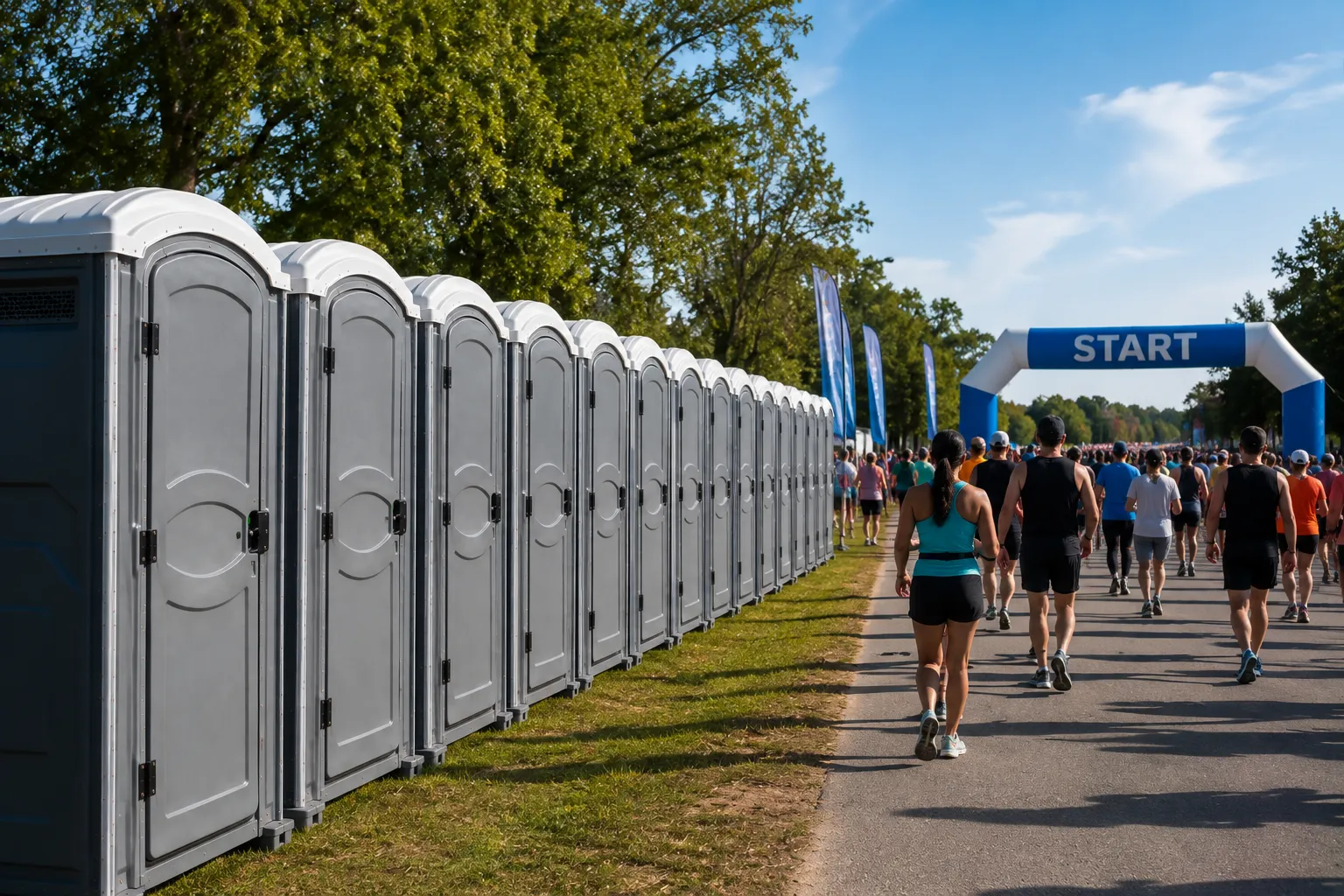
Pittsburgh Marathon Weekend runs in May and is organized by P3R, drawing runners through neighborhoods that range from wide boulevards to narrow, hillside blocks. Race organizers usually plan restroom counts around how many porta potties you need per corral, not just a flat citywide number, because start areas need heavy volume in a short window while later mile markers need steady, lower-traffic coverage. If you are building a race-day sanitation plan from scratch, start with our event restroom rental guide, then narrow down to marathon-specific numbers here.
How many restrooms does a marathon need?
Plan on clustering units at the start corral, the finish line, and every second or third aid station, not spreading them evenly along the route. A typical setup uses standard porta potty rental units for corrals and aid stations, with a few ADA accessible porta potty units at the start and finish. ADA Standards section 213.2 requires that where single-user portable units are clustered, at least 5 percent of the cluster, and never fewer than one unit, must be accessible. That rule alone changes how a race director orders equipment for a 20-unit corral versus a 4-unit aid station.
Spectator zones need their own count too, separate from runner-facing units. Crowded viewing areas near Point State Park or along the Boulevard of the Allies pull foot traffic that has nothing to do with pace groups, and organizers often underbuild here. For weekend events with heavy family attendance, a festival restroom rental plan crossed with race logistics usually gets the count right.
Where do restrooms go on a race course?
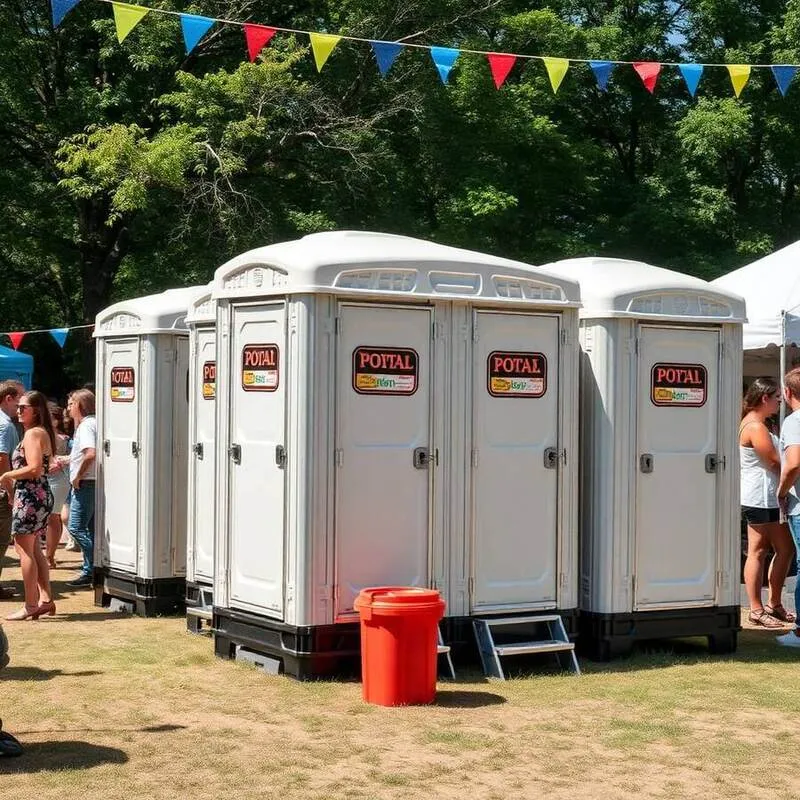
Corrals, aid stations, and the finish chute are the three non-negotiable zones. Everything else depends on the course map. Pittsburgh's terrain complicates this more than most cities: the Citywide Steps Assessment counts more than 800 sets of city steps citing over 45,000 individual steps, concentrated in neighborhoods like the South Side Slopes and Greenfield, and in several of those areas the legal frontage of a property is a staircase, not a driveable surface. A service truck cannot always reach a corral the way a course map suggests it can, so route staging around vehicle access, not just runner flow. Our porta potty placement guide walks through ground clearance and access width in more detail.
Placement on public streets also runs into Pittsburgh City Code Title Four, Chapter 416, which governs obstructions in the public right of way. Section 416.01 requires a permit from DOMI, the Department of Mobility and Infrastructure, before placing any obstruction on a street or sidewalk. No specific permit type is named for a standalone portable toilet, so confirm placement with DOMI directly rather than assuming a blanket exemption for race events. Course closures and traffic control for the marathon may already involve DOMI coordination, so folding restroom placement into that conversation early saves a second round of paperwork. Read more in our porta potty permit requirements page.
Do race organizers need power for lighting or medical tents?
Early start times mean pre-dawn staging, and pre-dawn staging means light. If your course runs through low-light corridors or your medical tent needs power before sunrise, a light tower rental or a temporary power pole covers that gap. Bracing a temporary power pole correctly matters more on race day than almost any other job site, because thousands of people move past it in a few hours. Here is how to brace a temporary power pole for a race crowd: set the base plate on level, stable ground, per ADA Standards section 302.1's stability standard for surfaces generally, guy-wire the pole at two or three points away from runner lanes, and keep the anchor points outside any barricaded path. OSHA 1926.404(b)(1)(ii) requires ground fault circuit interrupter protection on construction-adjacent power runs, and a race medical tent counts as exactly that kind of temporary electrical setup. Check pole bracing again after the corrals fill in, since crowd movement can shift barricades that were staked the night before.
Barricades themselves should meet OSHA 1926.202, which calls for barricades conforming to ANSI D6.1, particularly where restroom lines back up near a travel lane. Pair that with temporary fence rental or crowd control barrier rental at corral entrances to keep restroom queues from spilling into the runner path.
What does a marathon restroom setup cost?
| unit | duration | low | typical | high |
|---|---|---|---|---|
| standard | event | 200 | 400 | 800 |
| ada | weekend | 199 | 240 | 300 |
| trailer | event | 2499 | 3500 | 3899 |
| deluxe | day | 85 | 300 | 1200 |
| handwash station | included in most event packages | - | - | - |
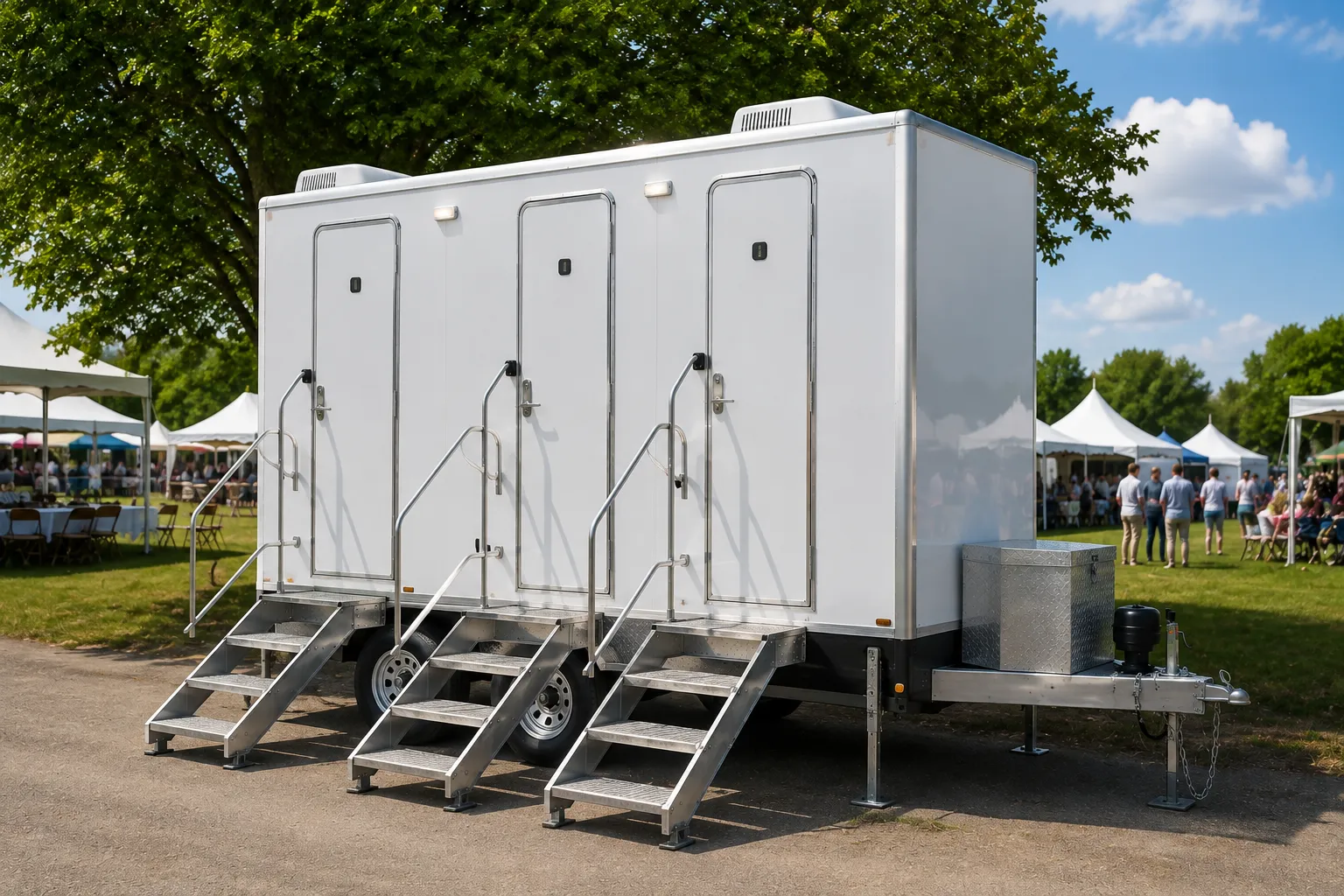
Larger races with VIP or sponsor areas sometimes add a luxury restroom trailer or an 8 stall restroom trailer near the finish line festival zone. Compare full trailer pricing on our restroom trailer rental cost page before committing to a package.
Should we add handwashing stations along the course?
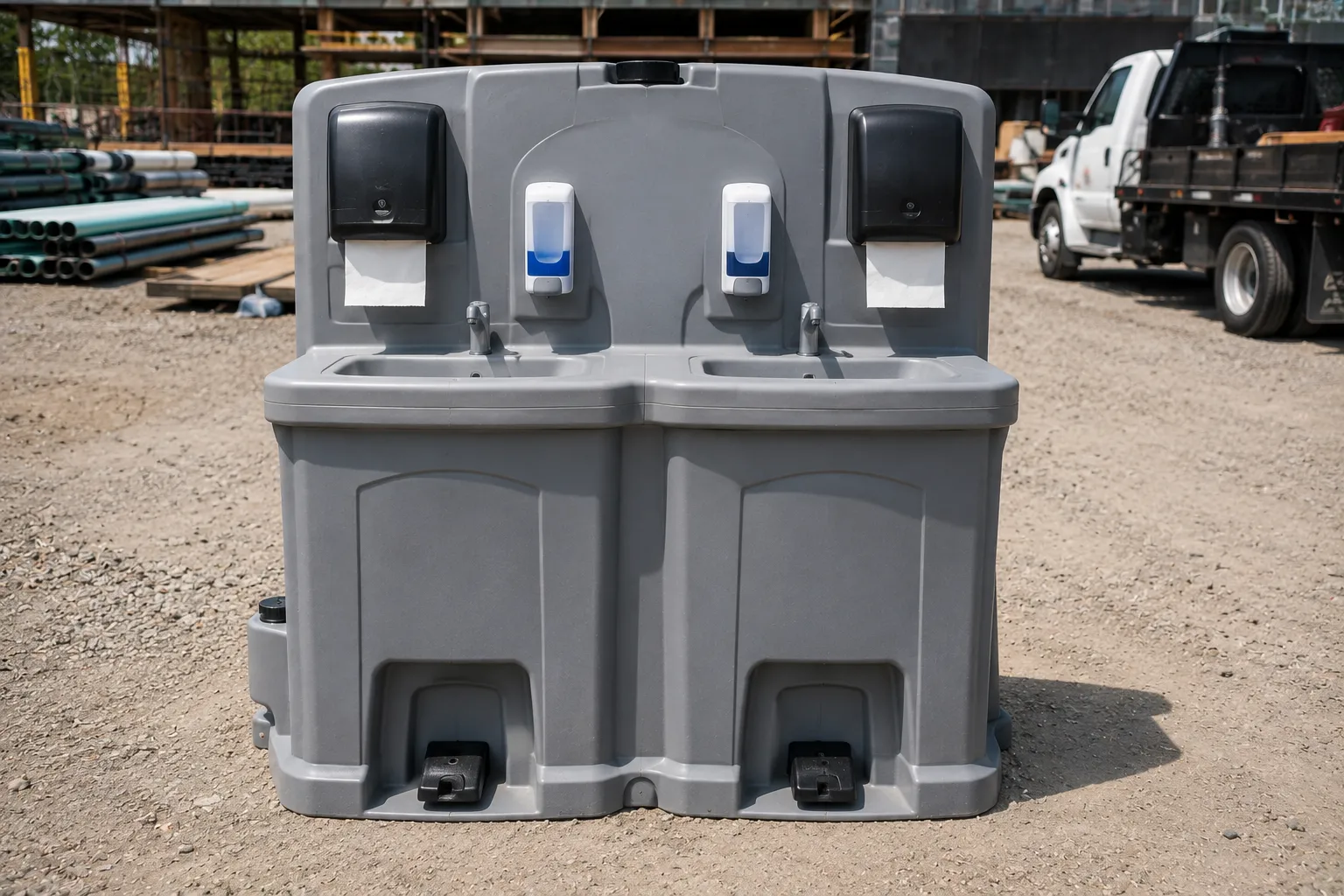
Yes, at every restroom cluster. OSHA 1926.51(a)(1) requires an adequate supply of potable water at places of employment, and race volunteers and medical staff count as employees for that purpose even on a one-day event. A handwashing station rental placed beside each restroom bank keeps runners and volunteers from touching gel packets and aid station food with unwashed hands. If your race includes cooking stations at post-race food areas, note that 29 CFR 1910.141(d)2 requires soap and a towel or hand-drying device at wash stations; hand sanitizer alone does not satisfy it. A portable sink rental with a built-in soap dispenser covers that requirement without extra signage.
Does weather change race restroom planning?
Yes, especially outside the marathon's May window. Pittsburgh averages 10.1 days a year at or above 90 F, so heat is a minor factor for a spring race, but cold snaps and rain are real risks. If your event runs into fall or winter, our porta potty in winter guide covers freeze protection, since Pittsburgh sees roughly 113.6 days a year at or below 32 F.
FAQ
How far in advance should we book race restrooms?
Book as soon as the course map and corral layout are final, ideally weeks ahead for anything the size of Pittsburgh Marathon Weekend. Late bookings risk losing ADA units, which run in limited supply, or losing access to the exact street segment you need under a DOMI permit timeline.
Can restrooms be placed inside Point State Park?
Point State Park is a 36-acre Pennsylvania DCNR state park that publishes its own Special Event Guidelines, separate from City of Pittsburgh right-of-way rules. Any restroom placement inside the park boundary needs coordination with DCNR directly, not just DOMI, since the park sits under state, not city, jurisdiction.
Do we need separate units for volunteers and runners?
It helps, especially at aid stations where volunteers need faster access between shifts. A dedicated bank of standard porta potty rental units near the volunteer check-in table keeps that traffic off the runner-facing line and shortens both queues.
What happens if a restroom needs to move after setup?
Call before moving anything placed under a DOMI permit, since 416.01 ties the permit to a specific location. For units on private property or park land outside the right of way, Pittsburgh Porta Pros can usually reposition a standard unit within the same footprint without a new appointment.
How do porta potties get serviced mid-race?
For a one-day event, most units are serviced once before gates open and checked again post-race rather than mid-event. ANSI/PSAI Z4.3 sets a baseline of one service visit per week for up to 10 users over a standard 40-hour week; a race day is a different load profile entirely, so service timing gets built into the event quote instead of a weekly schedule.
Are accessible restrooms required at every aid station?
ADA Standards section 213.2 requires at least 5 percent of a clustered group of single-user units to be accessible, with a minimum of one, wherever units are clustered. Small aid stations with only two or three units still need one accessible unit under that minimum.
Next step
Get a delivery date
Tell us the address, the dates and the headcount. We size the order and confirm the route.