
How Do Porta Potties Work On A Job Site?
On a construction site, the unit works the same way it does anywhere else, just harder. A standard porta potty rental sits on level ground near the work zone, gets used all day by a rotating crew, and gets serviced on a set interval. OSHA 1926.51(c) sets the ratio: 1 toilet for 20 workers or fewer, then 1 toilet seat and 1 urinal per 40 workers once the crew climbs past that. A general contractor in Oakland running a 60-person crew on a project near the UPMC bed tower site needs to run that math before the first unit gets dropped, not after an inspector asks about it.
The unit itself is about 44 by 48 inches on the ground and roughly 92 inches tall, so it fits in tight urban lots without eating the whole staging area. That matters in a city like Pittsburgh, where a lot of frontages are narrow and some are literal staircases rather than driveways. The Citywide Steps Assessment counts more than 800 sets of city steps, and in neighborhoods like the South Side Slopes or Troy Hill, the legal address of a property may not connect to a street a truck can reach. Plan placement with that in mind, or check the porta potty placement guide before you commit to a spot.
Picture the construction worker running to the porta potty between concrete pours. He does not need instructions. Lift the seat, use it, close it, done. The tank below holds everything until the truck comes. That simplicity is the entire point of the design, and it is why portable toilet rental has barely changed in decades.
How Does A Portable Sink Work?
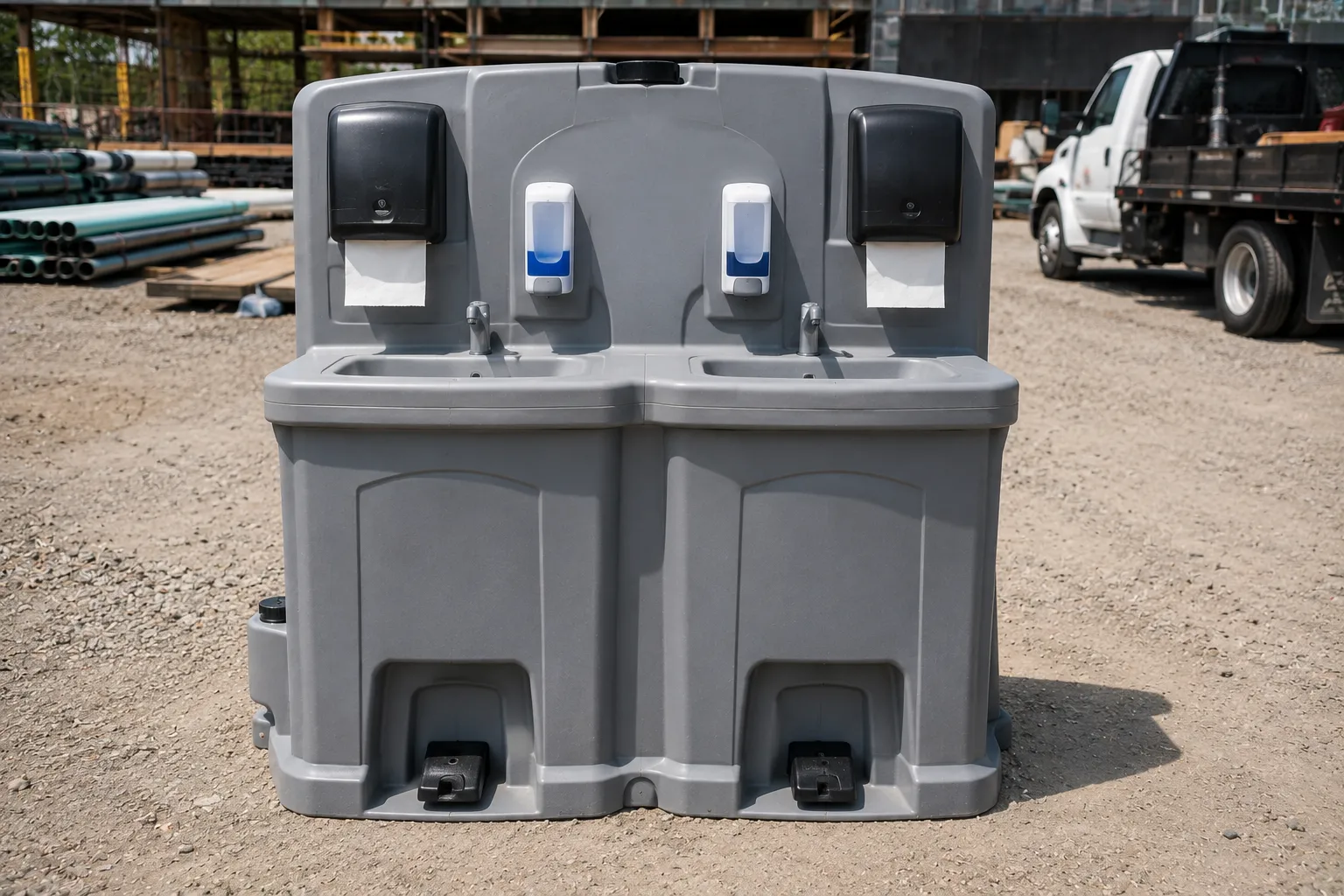
A portable sink runs on a fresh water tank up top, a foot pump or hand crank, and a gray water tank underneath to catch what drains out. No plumbing hookup needed. Push the pump, water comes out of the spigot, soap and paper towels sit in a small dispenser on the unit. It is a closed loop, which is why a handwashing station rental can go anywhere a job needs it, including sites with zero water access.
This is not the same thing as OSHA 1926.51(f)(1), which requires washing facilities specifically where workers are applying paints, coatings, herbicides or insecticides. That rule is about contaminant exposure, not general hygiene. For food service or agricultural crews, 29 CFR 1910.141(d)(2) is the relevant standard, and it specifically requires soap and towels or a hand-drying device; hand sanitizer alone does not satisfy it. Farms running hand-labor crews also fall under OSHA 1928.110, which sets one facility per 20 employees within a quarter mile walk. If you are trying to figure out which rule applies to your crew, the handwashing requirements page breaks it down further, and a portable sink rental or hand sanitizer station rental can fill the gap depending on which standard you are working under.
How Do Flushable Porta Potties Work?
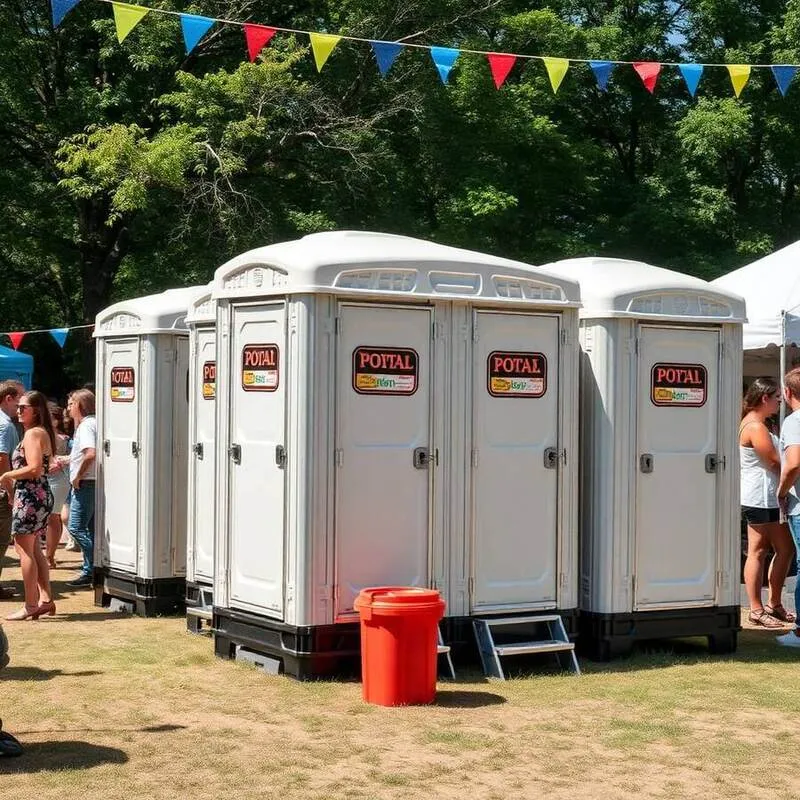
A flushable unit, sometimes called a deluxe model, adds a small onboard water tank and a foot pump or flush handle that pushes a rinse of water through the bowl into the holding tank below. It does not connect to a sewer. The water just helps carry waste down and knock back odor between services. A deluxe flushable porta potty still needs the same pump-out schedule as a standard unit, it just feels closer to a real bathroom while you are in it. These get requested a lot for weddings and higher-end events where guests notice the difference. Check the restroom trailer rental line too if the flush feature matters enough that you want sinks and mirrors in the same unit.
How Do Camping Porta Potties Work?
For camping, the logic scales down. A camping porta potty works exactly like the job site version, just smaller in some cases, and placement matters more because there is no curb to roll it up against. Groups running events at Frick Park or Riverview Park need a flat, accessible spot with truck access for delivery and pickup. Point State Park, the 36 acre DCNR park at the confluence of the three rivers, publishes its own Special Event Guidelines for anyone bringing in rented equipment, so check those before you assume a spot works.
What Chemicals Keep A Porta Potty From Smelling?
The blue liquid in the tank is a deodorizing and waste-breakdown chemical, usually formaldehyde-free in newer formulations, that suppresses odor and helps liquefy solid waste between services. This is separate from septic tank cleaning chemicals used in a home system, which are a different product entirely and not something you add to a rented unit yourself. If someone searches for portable toilet chemicals near me, they are usually a facilities manager restocking a fleet, not a renter. Pittsburgh Porta Pros handles that restocking as part of the service visit under the how often are porta potties cleaned schedule, so it is not something a customer needs to source. For a home system, septic tank cleaning uses pumping, not additives, and the septic tank warning signs page covers when a tank needs attention.
Where Can A Porta Potty Legally Sit In Pittsburgh?
Placement in the public right of way needs confirmation with the City. Pittsburgh City Code Chapter 416.01 requires a permit from DOMI, the Department of Mobility and Infrastructure, before anything obstructs a street or sidewalk, and no specific permit type is named for a standalone portable toilet, so check with the city before assuming a private lot rule applies. Dumpsters have a defined path through the Construction Staging Permit; porta potties do not have that same clarity yet. The dumpster permit requirements page covers that separate process if you are renting both. For everything else, the porta potty permit requirements page has what is currently confirmed.
Do Porta Potties Need To Be Anchored Down?
Yes, on windy or sloped sites. Pittsburgh's hillside terrain, reflected in its dedicated H Hillside zoning district, means some placements need stakes or ballast to keep a unit from sliding or tipping. Flat pads near Schenley Park rarely need it; a slope in Emerald View Park usually does.
How Often Does A Porta Potty Get Serviced?
Weekly is the baseline for light use, per the ANSI/PSAI Z4.3 standard, which covers up to 10 users over a 40 hour week. High-traffic construction sites or multi-day events usually need service two to three times a week. Check how often are porta potties cleaned for a fuller breakdown by use case.
How Much Does A Standard Rental Cost In Pittsburgh?
A standard unit typically runs 100 to 350 dollars a day, 130 to 500 dollars a week, and 125 to 325 dollars a month, depending on duration and delivery distance. Exact pricing depends on site access and length of rental. See porta potty rental cost for the full breakdown.
Do I Need An ADA Unit On My Site?
If you are clustering multiple single-user units, ADA Standards section 213.2 requires at least 5 percent to be accessible, with a minimum of one. An ADA accessible porta potty also needs a 60 inch turning circle under section 304.3.1 and a 36 inch clear route under section 403.5.1.
Can A Delivery Truck Reach A Narrow Pittsburgh Street?
Not always. A roll-off or service truck typically needs about 60 feet of straight clearance behind it, which is tight on some Pittsburgh streets with posted bridge weight limits or no driveway access. Confirm access before delivery day using the porta potty rental checklist.
What Is The Difference Between A Standard Unit And A Restroom Trailer?
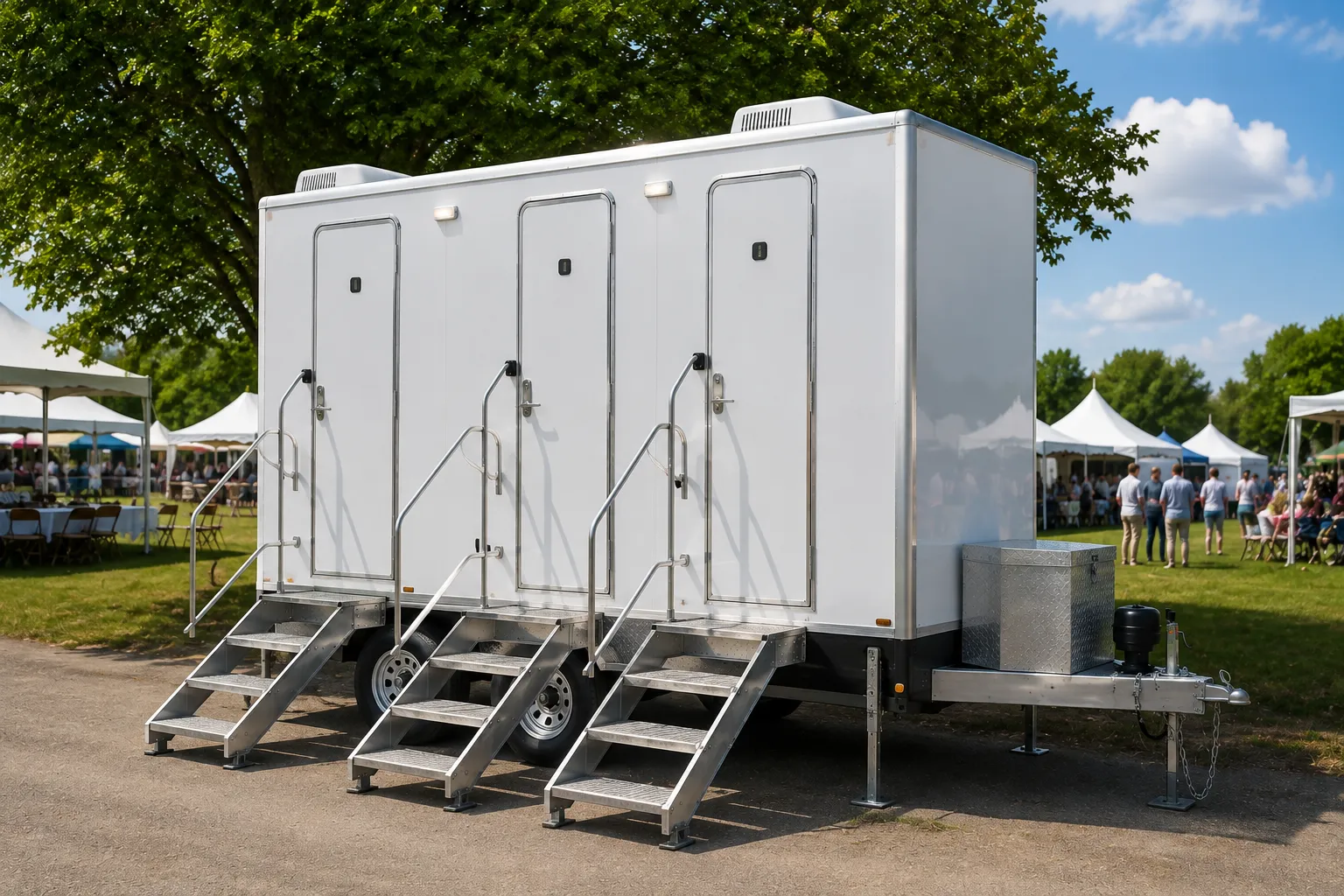
A standard unit is a single self-contained toilet with no running water beyond a flush model's onboard tank. A restroom trailer rental is a towable unit with multiple stalls, sinks, and often climate control, built for weddings, festivals, or larger crews needing a real bathroom experience.
Next step
Get a delivery date
Tell us the address, the dates and the headcount. We size the order and confirm the route.