
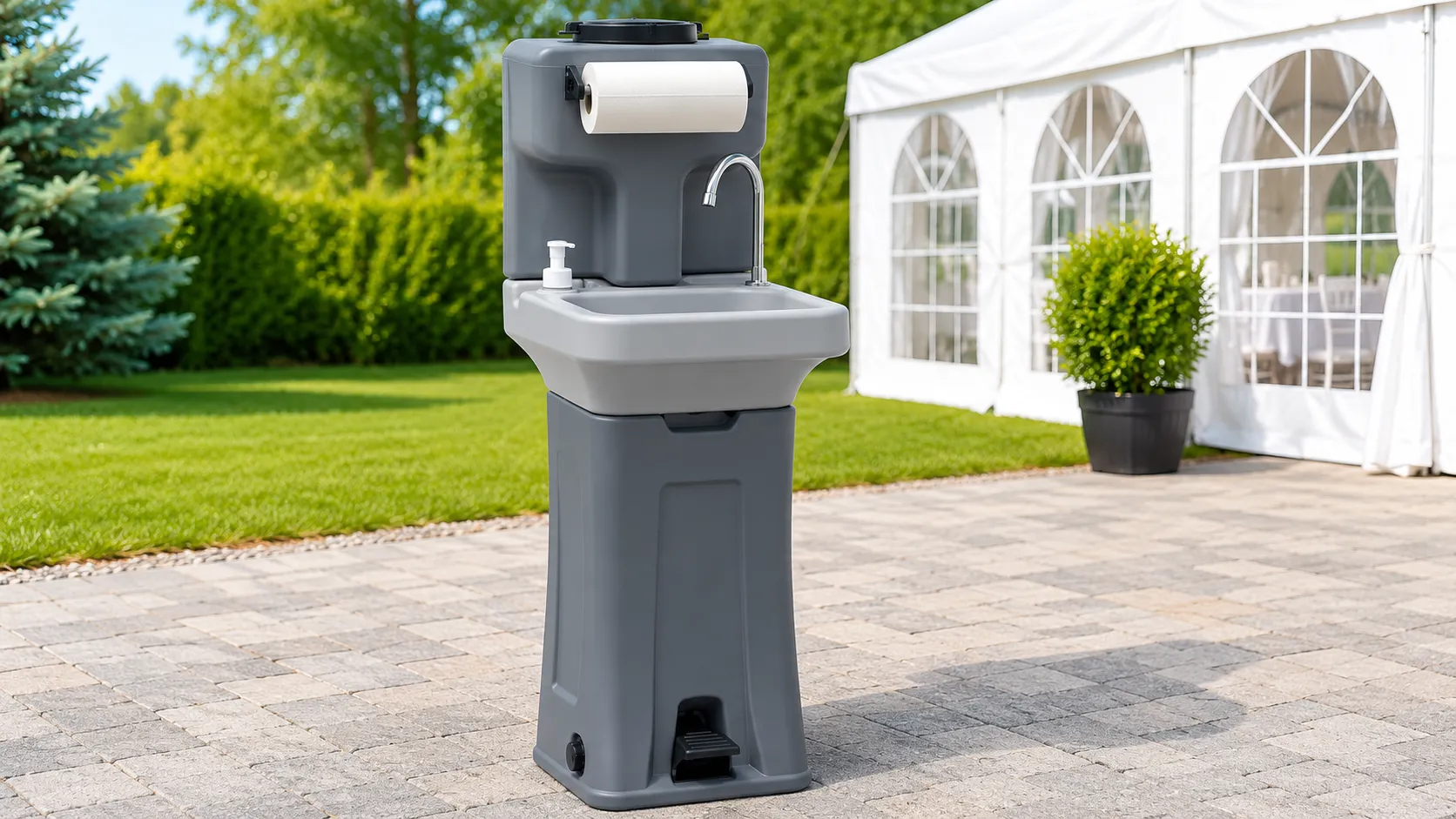
A portable sink is not a luxury add-on. It is the thing that satisfies 29 CFR 1910.141(d)(2), which requires washing facilities to have soap and towels or a hand drying device, not hand sanitizer alone. On a construction site in Oakland or a food stand at Picklesburgh, that distinction matters, because an inspector checking a jobsite against OSHA 1926.51(a)(1), the potable water requirement, is not going to accept a squeeze bottle of gel as compliance.
What is a portable sink station?
A portable sink station is a self-contained basin with its own fresh water supply, usually a 4 to 7 gallon tank, a foot pump or battery pump, and a grey water tank underneath to catch runoff. No plumbing hookup needed. You fill the fresh tank, empty the grey tank between uses, and the unit runs on its own for a job site, a food booth, or a backyard event. Larger stations scale up to multiple basins fed by bigger portable sink water tanks, built for crews or event lines instead of a single user.
Some renters ask for a portable sink to wash hair, not just hands. That is a real use case at construction camps, disaster relief sites, and long-duration events where workers or attendees do not have hotel access. A portable sink for hair washing works the same way as a hand station: fresh tank in, grey tank out, just paired with a taller basin or a spray attachment. If you are staffing a longer event, check our event restroom rental page for how these stack with restroom units.
Do portable sinks need hot water?
Some do, some don't, and it depends on the job. A hot water portable sink runs a small heating element or a pre-heated tank, and it matters most for food service, medical settings, or any job covered by OSHA 1926.51(f)(1), which requires washing facilities where employees apply paints, coatings, herbicides or insecticides, or handle other contaminants. If your crew is painting, staining, or spraying anything on a Pittsburgh renovation site, cold water alone will not cut it under that standard.
For general job site hand washing that is not tied to paints or chemicals, a standard foot-pump unit with cold or ambient water usually satisfies OSHA 1926.51(c), the general sanitation and toilet facility standard, alongside your standard porta potty rental units. We size hot water units case by case; ask when you request a quote.
Where do portable sinks get used in Pittsburgh?
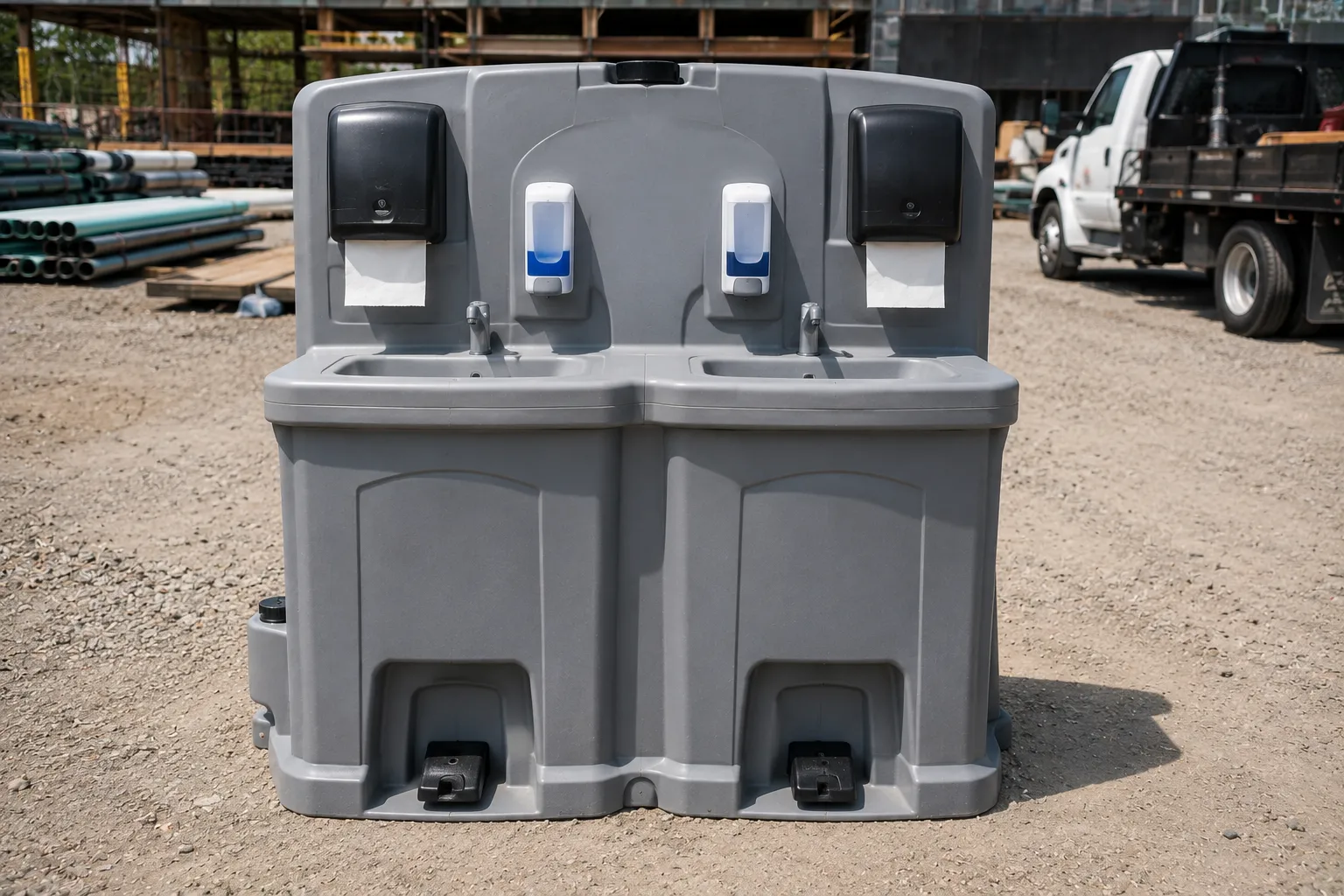
Construction sites lead the list. Pittsburgh issued 9,158 building permits in 2025 with a combined declared value over 1.6 billion dollars, and 139 of those were demolition permits tied to the Construction Staging Permit process run through DOMI, the City of Pittsburgh Department of Mobility and Infrastructure. Any of those active sites needs handwashing station rental units alongside toilets, especially where crews are stripping paint or applying coatings under 1926.51(f)(1).
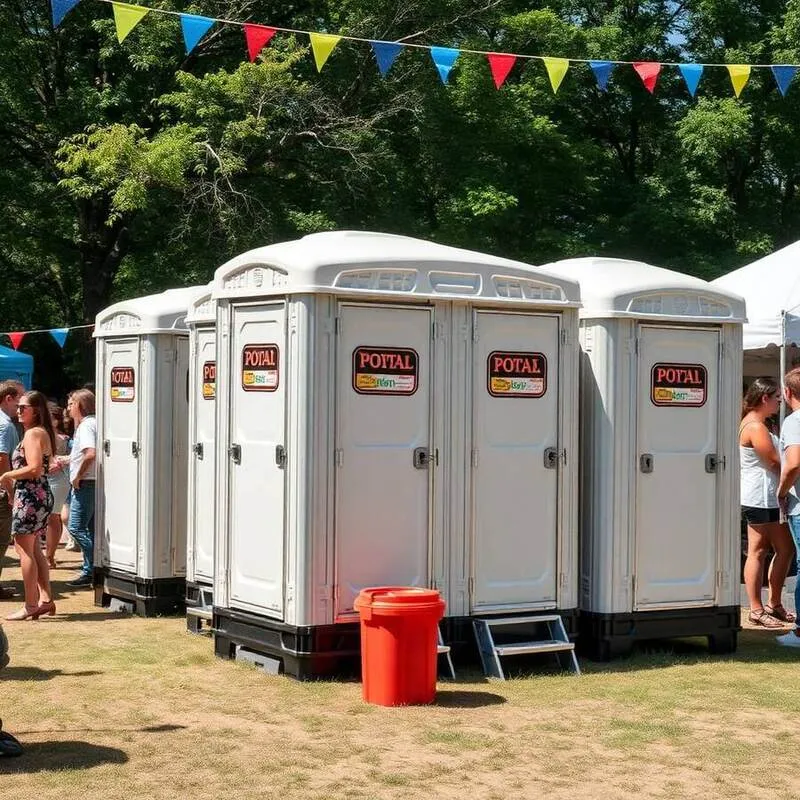
Events are the other big driver. Picklesburgh in July fills Downtown, Market Square and Arts Landing with food vendors who need wash stations at every booth. The Dollar Bank Three Rivers Arts Festival, running since 1960 at Arts Landing in the Cultural District, has the same need on a bigger scale. If you are planning a festival footprint, our festival restroom rental and concert restroom rental pages walk through unit counts. The Pittsburgh Vintage Grand Prix, held every July in Schenley Park and billed by its own organizers as the nation's largest vintage street race, is another spot where portable sink stations sit next to restroom banks along the paddock and pit areas.
Farms and agricultural operations outside the city core have their own rule. OSHA 1928.110 requires potable water, toilets, and handwashing for hand-labor employees, at one facility per 20 employees, reachable within a quarter mile walk. That standard shows up on our farm and agricultural restrooms page, and portable sinks are usually the easiest way to hit the handwashing half of it without trenching water lines.
How many portable sinks do I need?
Match it to your headcount and your toilet count, not to guesswork. If you are running standard porta potty rental units on a job site, a good rule is one sink station per two to three toilets, more if the crew is doing painting, coating, or pesticide work covered under 1926.51(f)(1). Our how many porta potties do I need guide covers the toilet-side math, including the OSHA 1926.51(c) ratio of one facility per 20 workers up to a crew of 20, then one seat and one urinal per 40 workers as the crew grows.
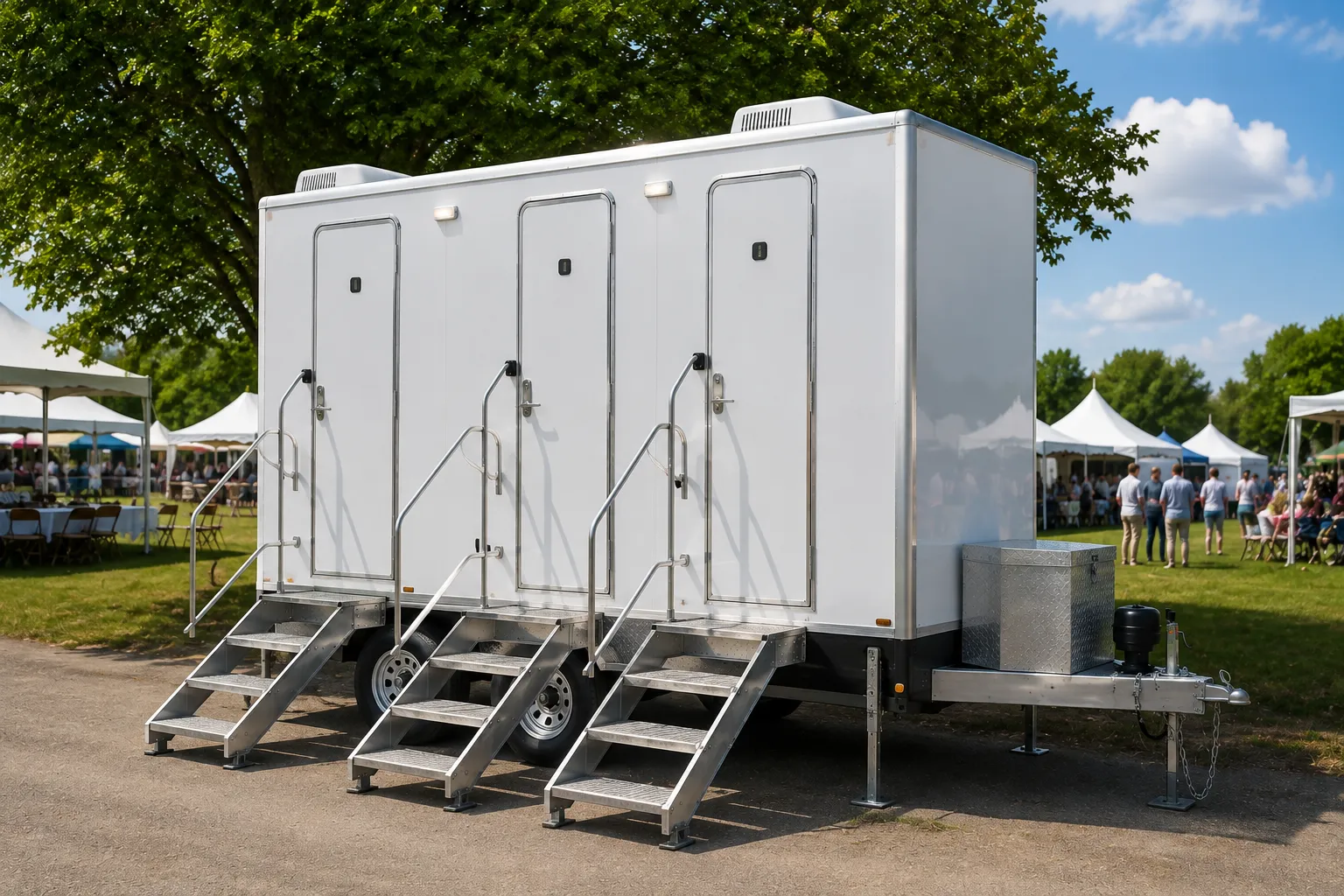
Events scale differently. A wedding at Schenley Park with 100 guests needs less than a beer festival with 3,000, and food vendors always want their own dedicated sink rather than sharing a line. Check our portable sink rental sizing against your event restroom rental plan before you finalize a headcount.
What does portable sink rental cost?
| Duration | Typical range |
|---|---|
| Day | Priced with delivery, similar band to short-term standard unit rentals |
| Weekend | Comparable to weekend service_fee bands, 400 to 1,200 |
| Week | Runs alongside standard weekly rental bands |
| Month | Similar structure to monthly delivery_fee, 120 to 420 |
Delivery fees generally run 100 to 500 dollars for a single day drop, or 50 to 150 dollars folded into a weekly rate. For a full breakdown of how delivery, service, and unit costs stack for your event or site, see porta potty rental cost and monthly porta potty rental.
Can I use a portable sink for camping?
Yes. A camping portable sink is usually the smallest version we stock, a single basin with a 4 to 7 gallon tank and a foot pump, sized to sit on a table or tailgate. It is popular for group campsites, trailheads near Frick Park or Riverview Park, and any outdoor stay where there is no running water. Pair it with a standard porta potty rental unit for a full setup, and check our porta potty in winter guide if you are camping during Pittsburgh's colder months, since the region averages 113.6 days a year at or below 32 F.
Does placement need a permit?
If the sink station sits on private property, no city permit applies. If you need to place one in the public right of way, in a parking lane or on a sidewalk, Pittsburgh requires a DOMI right of way permit under City Code Chapter 416, Section 416.01, which states a permit must be obtained from the Director before placing any obstruction in the street or sidewalk. See our porta potty permit requirements and dumpster permit requirements pages, since dumpsters and sinks in the right of way follow the same underlying obstruction rule even though no specific city permit type is published for portable sinks or toilets.
How much water does a portable sink hold?
Small units run 4 to 7 gallon fresh tanks, enough for a single basin over a shift before refilling. Larger multi-basin stations use bigger portable sink water tanks sized to crew or guest counts. Grey water capacity usually matches or exceeds fresh capacity so the unit doesn't overflow before it needs a refill.
Do portable sinks need a nearby water source?
No. That is the entire point of the design. You fill the fresh tank before delivery or on site, and a foot pump or small motor draws it to the basin. No hookup, no trenching, no dependency on a spigot, which is why they work equally well on a rural farm and agricultural restrooms site and a Downtown Pittsburgh street festival.
Can a portable sink handle hair washing?
Yes, with the right basin. A portable sink for hair washing usually means a deeper basin or a spray nozzle attachment rather than a different water system underneath. It is common at disaster relief camps and multi-day outdoor events; see disaster relief sanitation for how these get bundled with shower and restroom units.
Is hot water available on portable sinks?
On request. Standard units run cold or ambient water, which satisfies general hand washing needs under OSHA 1926.51(c). A hot water portable sink is recommended, and sometimes required, for food service and for any work covered under OSHA 1926.51(f)(1), meaning paint, coating, herbicide, or insecticide application.
How far in advance should I book a portable sink station?
Book as soon as you have a date, especially for summer events. July alone carries both Picklesburgh and the Pittsburgh Vintage Grand Prix in Schenley Park, and vendors compete for the same inventory. For job sites, order alongside your construction site services so sinks and toilets arrive together on day one.
Do I need a portable sink if I already have porta potties?
Usually yes. A toilet alone doesn't satisfy hand washing requirements under 29 CFR 1910.141(d)(2), which calls for soap and towels or a drying device, not just a toilet on site. Pairing a portable toilet rental with a sink station is the standard setup for both job sites and events across Pittsburgh.
Next step
Get a delivery date
Tell us the address, the dates and the headcount. We size the order and confirm the route.