
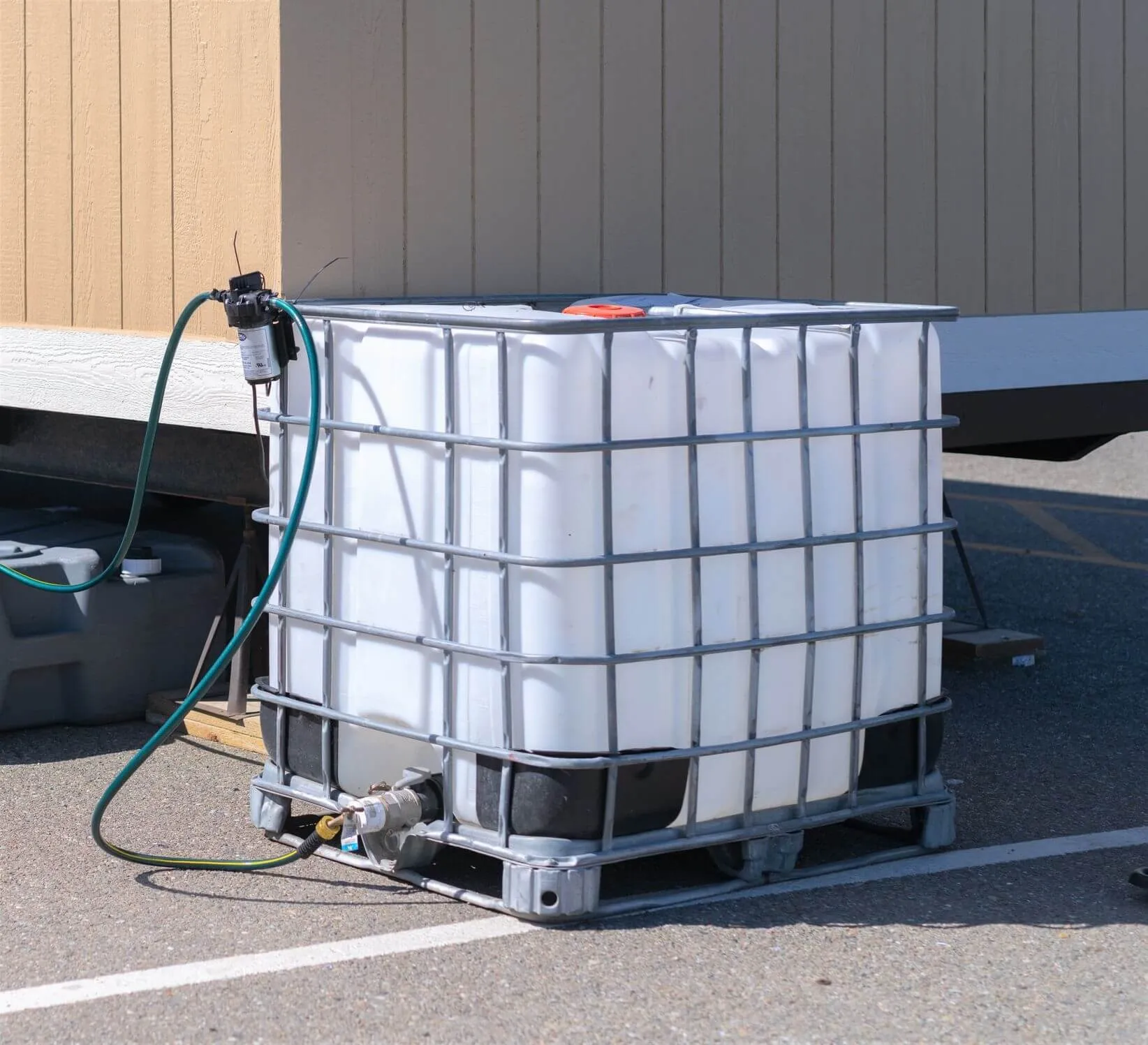
People search "holding tank rental near me" expecting one product, but there are really three. There is the tank built into every standard porta potty rental, holding 60 to 70 gallons per unit. There is a standalone black water holding tank for sites where a sewage connection is not an option, common on job sites around Oakland where institutional builds like the announced UPMC bed tower project keep crews on-site for months. And there is a portable water holding tank, which supplies drinking or wash water rather than storing waste. Pittsburgh Porta Pros rents all three, plus the pump-out service that keeps any of them running.
How much does holding tank rental cost in Pittsburgh?
A standard unit with its built-in 60 to 70 gallon tank runs 100 to 350 dollars a day and 130 to 500 dollars a week, based on measured pricing across the market. Monthly holding tank rental for longer jobs lands between 125 and 325 dollars. Septic-related pump service for larger tanks runs separately, typically 150 to 300 dollars per day.
| service | duration | typical range |
|---|---|---|
| standard unit (built-in tank) | day | 100 to 350 |
| standard unit (built-in tank) | week | 130 to 500 |
| standard unit (built-in tank) | month | 125 to 325 |
| septic pump visit | day | 150 to 300 |
| septic pump visit | weekend | 50 to 150 |
| delivery fee | one-time | 100 to 500 |
Weekly always costs more than daily and monthly always costs more than weekly, so if a quote runs the other way, ask why. For a full breakdown of what drives the number up or down, see porta potty rental cost and monthly porta potty rental for long jobs. If you are comparing a standalone tank against a full restroom trailer rental, the trailer route usually costs more up front but needs less frequent servicing.
What is a holding tank pump-out and how often do I need one?
A pump-out empties the tank once waste, or fats and solids in a grease context, builds past a safe level, and the industry baseline for servicing a portable unit is once a week for up to 10 users over a 40 hour week, per ANSI/PSAI Z4.3. Higher headcounts or longer hours mean more frequent visits. For a grease interceptor specifically, the pump-out point is when fats, oils, grease and solids reach 25 percent of the liquid depth, not a fixed calendar date. Residential septic tanks are different again: a typical household tank gets pumped every 3 to 5 years depending on tank size and how many people are using it. If you are trying to work out your own interval, how often to pump a septic tank walks through the variables, and septic tank warning signs covers what happens if you wait too long. For grease specifically, see grease trap pumping.
RV holding tank rental and portable water tanks
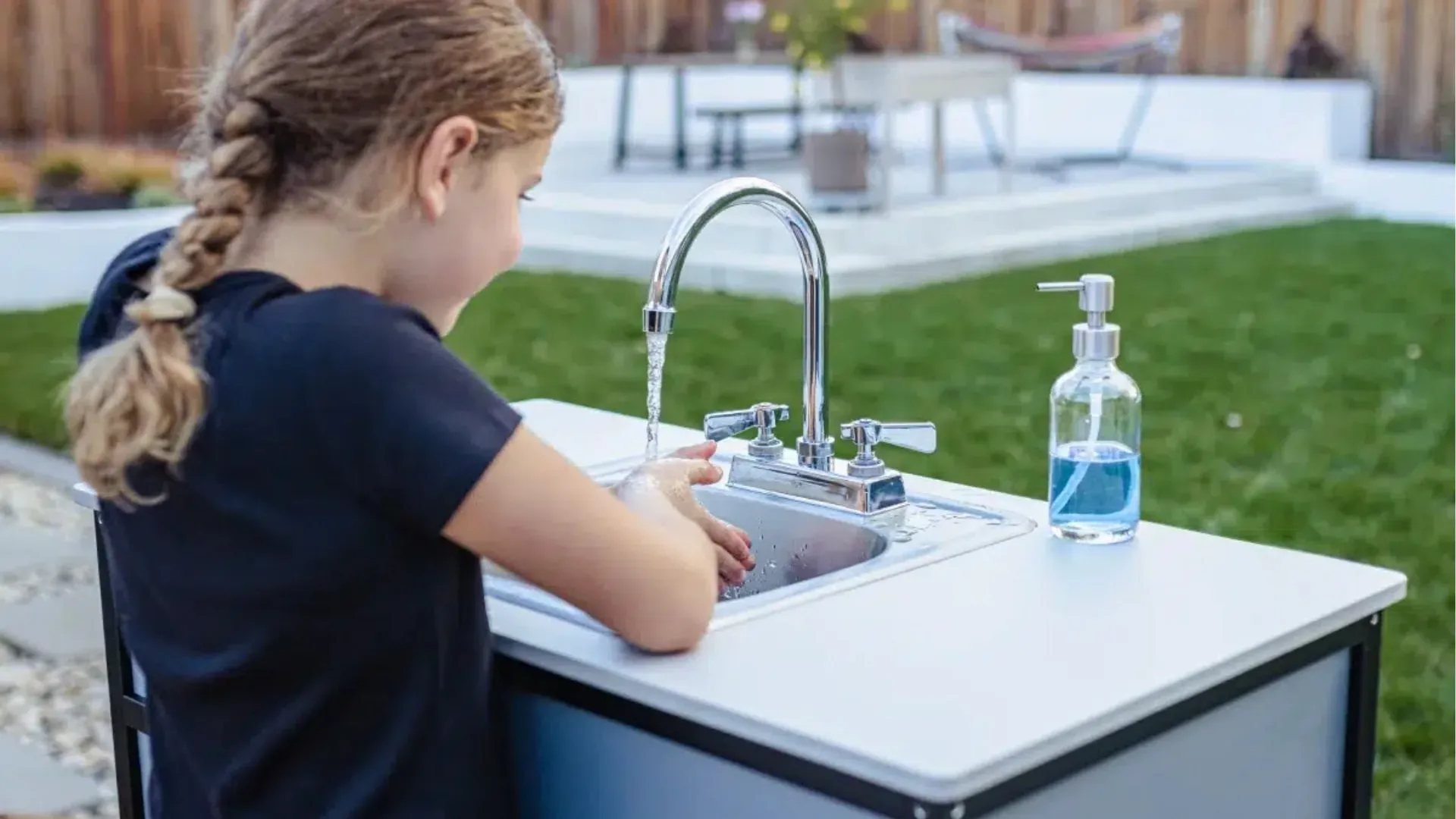
RV holding tank rental near me searches usually mean one of two things: a temporary black water tank for an RV parked somewhere without a dump station, or a portable water holding tank to keep a camp, crew, or event supplied with drinking water. Pittsburgh Porta Pros handles both, and if you are setting up for extended parking at a site like Point State Park or near Hartwood Acres during the Allegheny County Summer Concert Series, we can pair a water tank with a handwashing station rental or portable sink rental so the setup covers drinking, washing, and waste in one delivery.
Do I need a permit for a holding tank in Pittsburgh?
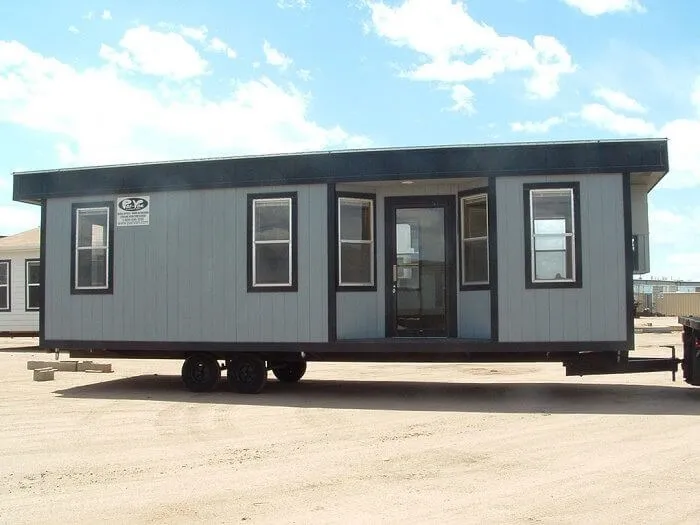
Placement in the public right of way requires confirming with the City of Pittsburgh. City Code Chapter 416 makes clear that any obstruction placed in the right of way, sidewalk or street, needs a permit from DOMI, the Department of Mobility and Infrastructure, before it goes down. No specific permit type is published for a standalone holding tank or portable toilet, so we recommend checking with DOMI directly before setup on any street-facing property. If your tank or unit sits entirely on private property, the right of way rule does not apply, but Pittsburgh's hillside terrain, including neighborhoods with jumpwalk-only frontage documented in the city's own Citywide Steps Assessment, can still limit where a truck can reach. Our dumpster permit requirements page covers the closest analogous permit process, the Construction Staging Permit, in more detail. General guidance also lives at porta potty permit requirements.
OSHA and sanitation rules for jobsite tanks
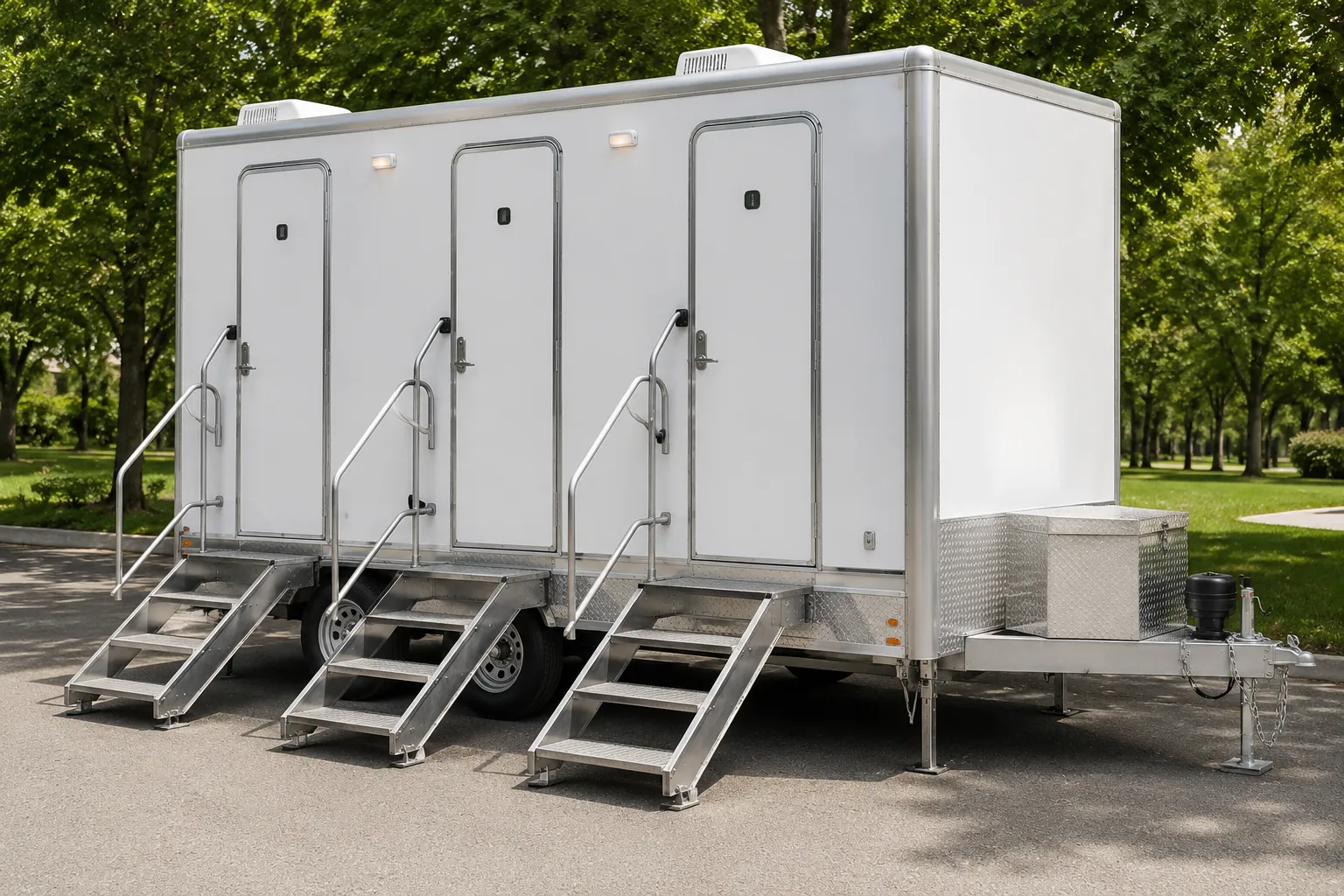
Construction sites need toilet facilities scaled to crew size: 1 facility for 20 workers or fewer under OSHA 1926.51(c)(1), stepping up as headcount grows. OSHA 1926.51(a)(1) also requires an adequate supply of potable water at every jobsite, which is where a water holding tank does real work alongside your toilets. If your crew handles paints, coatings, herbicides or insecticides, washing facilities are separately required under 1926.51(f)(1). For a full walkthrough of these ratios, see OSHA portable toilet requirements and how many porta potties do I need.
Pittsburgh Porta Pros delivers holding tanks and pump service across the city and into nearby towns, including Mount Lebanon 7.0 miles southwest, Shaler 8.2 miles north, and Bethel Park 11.3 miles south. Winter matters here too: Pittsburgh averages 113.6 freeze days and 44.1 inches of snow a year, so tanks left outdoors need winterizing help, covered on porta potty in winter. For construction sites specifically, construction site services bundles tanks, fencing, and toilets into one delivery.
How much does a septic holding tank pumping cost in Pittsburgh?
Septic pump-out visits typically run 150 to 300 dollars for a standard day visit, with weekend service between 50 and 150 dollars depending on access and volume. Larger residential tanks or sites with difficult truck access can push toward the higher end. See septic tank pumping cost for a full cost breakdown by tank size.
Can I rent a holding tank without renting a portable toilet?
Yes. A standalone black water or water holding tank can be rented on its own for RVs, remote crews, or events needing extra water capacity. Most residential and small jobsite customers combine the two anyway, since a portable toilet rental already includes a built-in 60 to 70 gallon tank.
How long can I keep a rented holding tank?
Rental length is flexible, from a single weekend event to a multi-month construction job. Monthly rates run 125 to 325 dollars for a standard unit's tank, and long jobs typically get a lower effective daily rate than short ones. Check monthly porta potty rental for the exact structure.
Do holding tanks need an accessible option?
Where portable toilet units with tanks are clustered on a site, ADA Standards section 213.2 requires at least 5 percent to be accessible, and never fewer than one unit. Accessible units also need a 60 inch turning circle under section 304.3.1. See ADA accessible porta potty for full specs.
What is the difference between a holding tank and a septic tank?
A holding tank stores waste for pickup and has no outlet or drain field, while a septic tank treats waste on-site and discharges through a drain field. Holding tanks suit temporary sites and RVs; septic tanks are permanent residential or commercial systems. Compare options at holding tank rental and septic pumping service.
Will a holding tank smell?
Not if it is serviced on schedule. Odor control depends on pump-out frequency, tank size relative to headcount, and weather. Our guide on do porta potties smell breaks down what actually causes odor and how service intervals fix it.
Next step
Get a delivery date
Tell us the address, the dates and the headcount. We size the order and confirm the route.