
Get this number wrong in either direction and it costs you. Too few units means lines, complaints, and workers wandering off to find a gas station. Too many means you paid for standard porta potty rental units that sat empty. The right count depends on whether you're running a jobsite or an event, how many hours people are on site, and whether alcohol is involved. Below is the math, broken out both ways, with worked examples for Pittsburgh conditions.
How Many Porta Potties Does a Construction Site Need?
OSHA 1926.51(c) sets the baseline: 1 toilet facility for 20 workers or fewer, then 1 toilet seat and 1 urinal per 40 workers once you cross 20, dropping to 1 seat and 1 urinal per 50 workers at 200 or more. That's the federal floor for construction site services, not a suggestion.
| Crew size | OSHA minimum |
|---|---|
| 1 to 20 workers | 1 toilet facility |
| 21 to 199 workers | 1 toilet seat + 1 urinal per 40 workers |
| 200+ workers | 1 toilet seat + 1 urinal per 50 workers |
A 15-person framing crew needs 1 unit. A 60-person crew crosses into the 21-199 bracket and needs roughly 2 toilet-and-urinal combinations, which most contractors satisfy with 2 to 3 standard porta potty rental units. Pittsburgh had 139 demolition permits and 4,133 Building and Development applications issued in 2025, and most of those jobs start the same way: someone has to figure out the toilet count before the crew shows up. If the site sits in Oakland near one of the larger institutional builds, like the UPMC bed tower project at roughly 900,000 square feet as announced, crew sizes can swing large enough to push past the 20-worker bracket fast, so recount every time the roster changes.
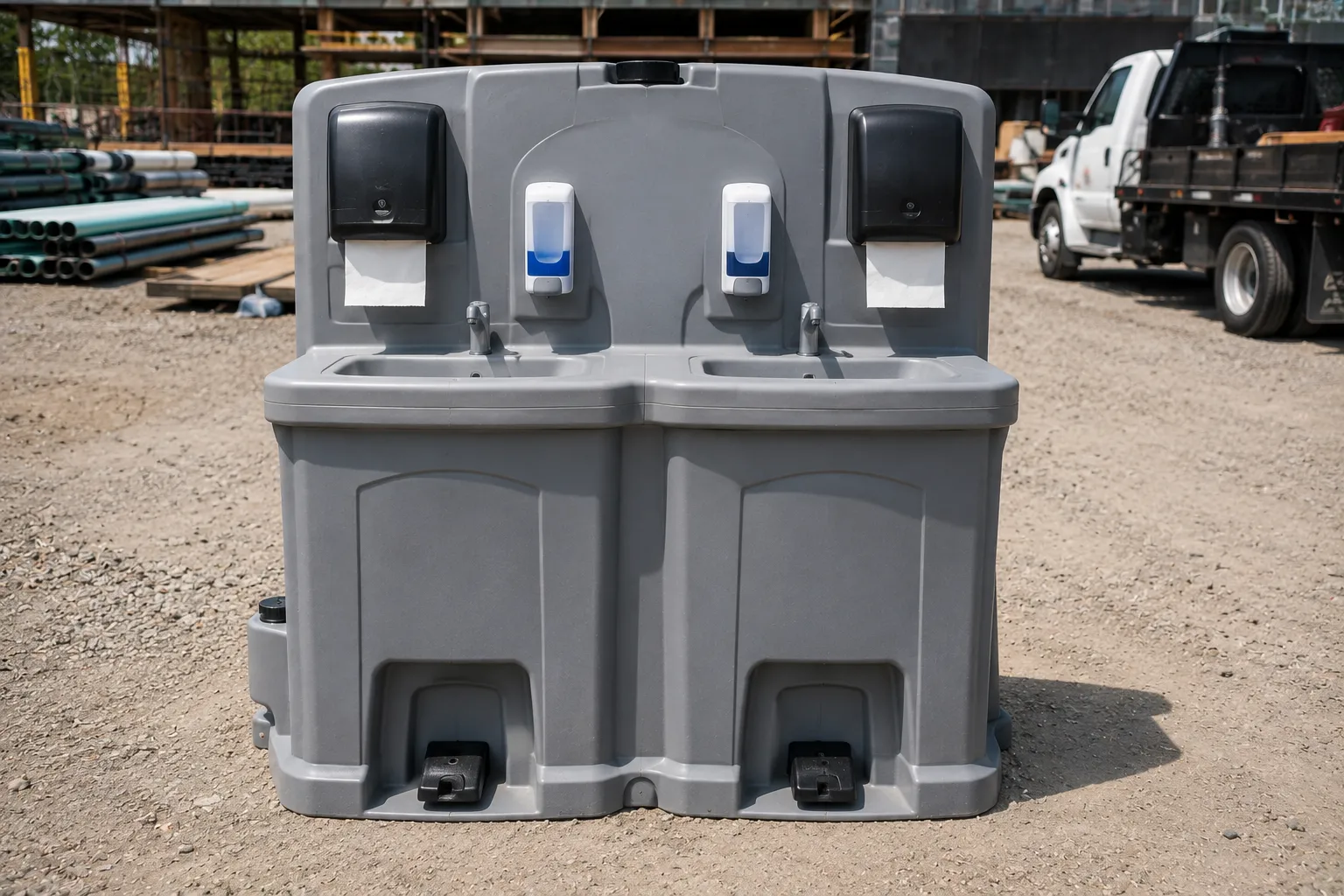
Don't forget water. OSHA 1926.51(a)(1) requires an adequate supply of potable water at all places of employment, separate from the toilet count. If your crew is applying paints, coatings, herbicides or insecticides, OSHA 1926.51(f)(1) also requires washing facilities for that specific work, which is a different rule than general jobsite sanitation and gets missed constantly. Pair a handwashing station rental with your toilets rather than assuming a 5 gallon jug covers it.
How Many Porta Potties Do I Need for an Event?
Events run on a per-guest, per-hour formula, not the OSHA jobsite table. The rule of thumb across the industry is roughly 1 unit per 50 guests for a 4 hour event, then you add units for longer durations, alcohol service, and food.
| Guest count | 4 hours, no alcohol | 4 hours, with alcohol | Full day (8+ hrs) |
|---|---|---|---|
| 50 | 1-2 units | 2-3 units | 2-3 units |
| 100 | 2-3 units | 3-4 units | 4-5 units |
| 250 | 5 units | 6-7 units | 8 units |
| 500 | 10 units | 12-13 units | 15 units |
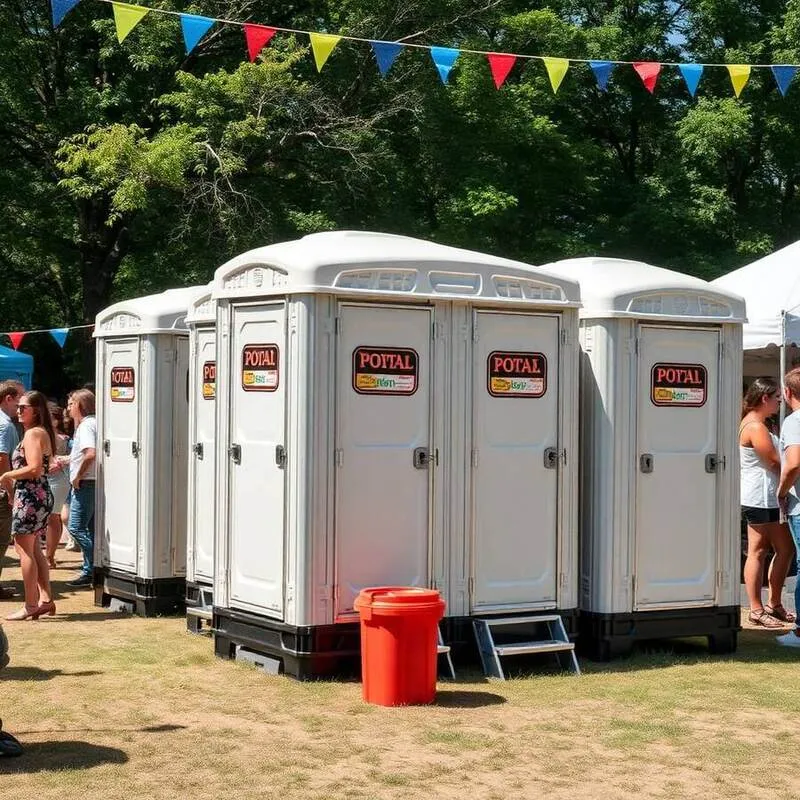
Alcohol changes the math because it changes bladder frequency, not because people drink more water. A wedding at Hartwood Acres with a beer and wine bar needs meaningfully more capacity than a dry corporate picnic with the same guest count. Multi-day festivals compound the problem: a 3-day run at Picklesburgh style headcounts needs units serviced daily, not once, since a standard tank holds 60 to 70 gallons and fills faster with sustained heavy use.
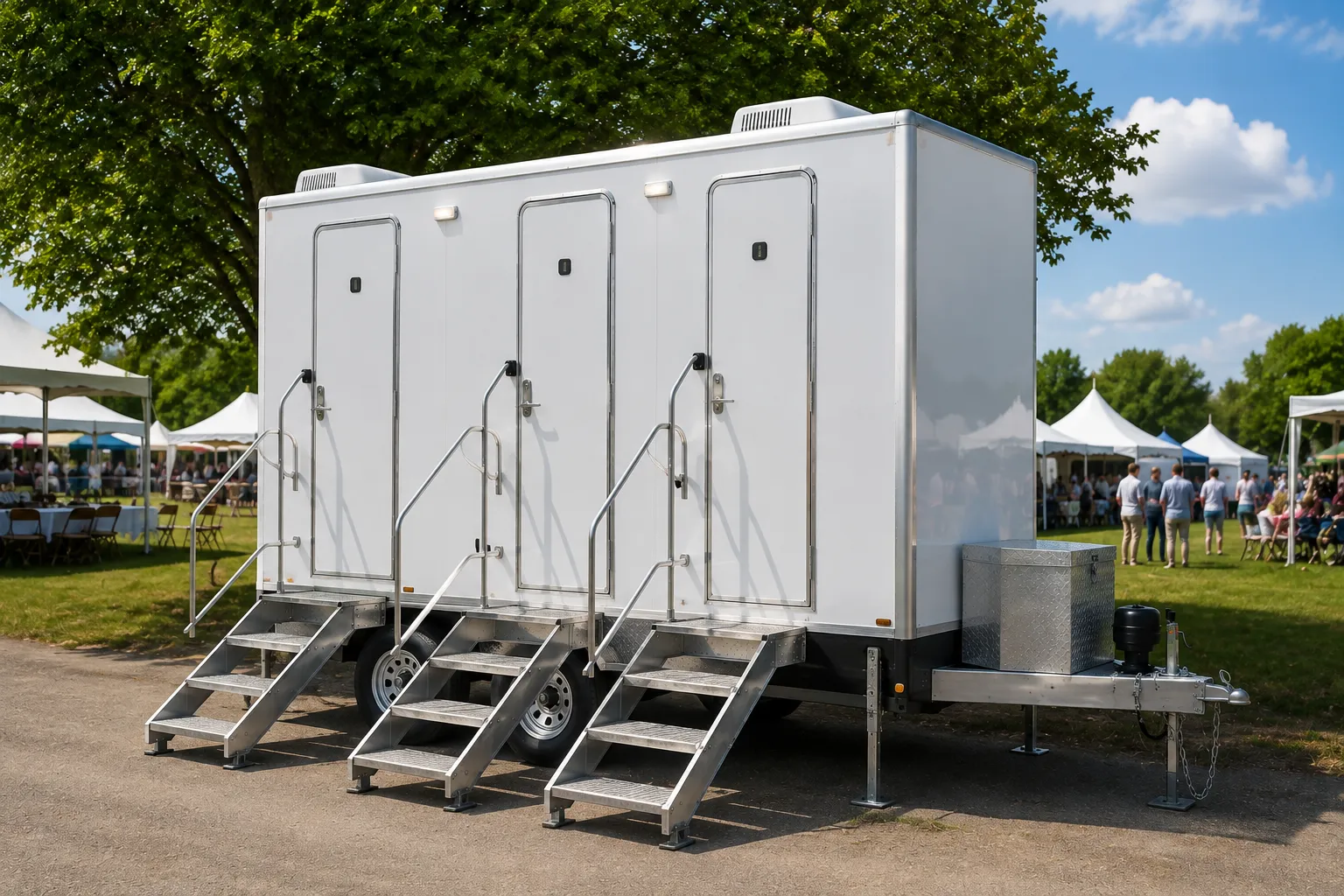
Worked example: a 300-guest outdoor wedding at Schenley Plaza, 6 hours, with a full bar, lands around 7 to 8 standard porta potty rental units plus at least 1 ADA accessible porta potty unit. If the couple wants something nicer than a job-site unit, swap in a deluxe flushable porta potty or step up to a restroom trailer rental sized to guest count, like a 2 stall restroom trailer for smaller gatherings or an 8 stall restroom trailer for the 300-guest range. Anyone planning at Point State Park, a 36-acre Pennsylvania DCNR state park, should know the park publishes its own Special Event Guidelines separate from city rules, which affects placement and count for event restroom rental bookings there.
Do I Need an ADA Accessible Unit?
Yes, if you're clustering standard units, at least one has to be accessible. ADA Standards section 213.2 requires at least 5 percent of clustered single-user portable toilet units be accessible, and never fewer than one, no matter how small the cluster. A 10-unit event bank needs at minimum 1 ADA unit; a 3-unit small event still needs 1.
An accessible unit isn't just a bigger box. ADA 304.3.1 calls for a 60 inch turning circle inside. ADA 404.2.3 sets minimum clear door opening width at 32 inches. ADA 403.5.1 requires the route to the unit have a minimum clear width of 36 inches, and if there's a ramp involved, ADA 405.2 caps the running slope at 1:12. Ground surface matters too: ADA 302.1 requires the surface be stable, firm and slip resistant, which is a real consideration on a gravel lot or a muddy jobsite after a Pittsburgh spring storm. Reach controls fall under ADA 308.2.1, and door hardware under ADA 309.4, requiring no tight grasping or pinching and no more than 5 pounds of force to operate. Check the ADA accessible porta potty page or the broader ADA restroom requirements guide before you finalize a site plan, especially if the venue has its own accessibility review, as many county and state parks do.
How Many Porta Potties for a Farm or Agricultural Crew?
Field labor runs under a different rule entirely. OSHA 1928.110 requires potable water, toilets and handwashing for hand-labor employees in agriculture, at a ratio of 1 facility per 20 employees, and the facility has to be within a quarter mile walk of where people are working. That quarter-mile distance rule doesn't exist in the general construction standard, so a farm crew spread across a large field needs multiple stations rather than one central bank. See farm and agricultural restrooms for placement specifics.
What About Dumpster Sizing Alongside the Toilet Count?
Most job sites that need construction site services end up ordering a roll-off dumpster rental at the same time they order toilets, and the sizing questions come up together. A 10 yard dumpster rental holds about 10 cubic yards, which works out to roughly 270 cubic feet, and suits a single-room cleanout or a small demo. A 20 yard dumpster rental holds around 540 cubic feet and typically carries 2 to 3 tons of mixed debris depending on material. A 30 yard dumpster rental holds close to 810 cubic feet and can carry 3 to 4 tons, and a 40 yard dumpster rental tops out near 1,080 cubic feet with a similar tonnage ceiling driven more by material density than volume. Heavier material like concrete or roofing shingles hits the tonnage cap long before the box is visually full, so check dumpster weight limits before loading. For exact footprint and clearance numbers by size, the dumpster sizes and dimensions page has the full breakdown, and every roll-off drop in Pittsburgh needs about 60 feet of straight clearance behind the truck to place the container.
Placement in the city has its own wrinkle. A demolition dumpster in Pittsburgh needs a Construction Staging Permit under the Demolition Dumpster work type, applied through OneStopPGH, and City Code 416.01 requires a permit before any obstruction sits in the public right of way. DOMI's guidance says the container should go in a parking lane wherever possible, and the approved permit has to be attached facing the sidewalk, legible, with a No Parking sign posted at least 48 hours ahead. See dumpster permit requirements and what cannot go in a dumpster before you order.
Where Does Placement Fit Into the Count?
Pittsburgh's terrain changes where units can physically go, which affects how many you need per phase of work. The city has a dedicated H Hillside zoning district plus a Landslide Prone Overlay, and in neighborhoods like the South Side Slopes, Oakland, Greenfield, the Hill District and Troy Hill, the legal frontage of a property can be a staircase rather than a driveable surface. The city's Citywide Steps Assessment counts more than 800 sets of public steps citywide. If a service truck can't reach the unit location directly, you may need units staged at a lower access point plus a plan for foot-carried supplies, which changes the count and the route. The porta potty placement guide covers ground surface and clearance in more depth, and porta potty permit requirements covers the obstruction rule, since no specific DOMI permit type is named for a standalone unit and only the general Chapter 416 obstruction rule is confirmed to apply.
Winter changes the math too. Pittsburgh averages 113.6 days a year at or below freezing and 44.1 inches of annual snowfall, so a jobsite running through January needs to think about porta potty in winter servicing, since access roads and unit function both get harder in sustained cold.
How many porta potties do I need for 100 people?
For 100 guests over 4 hours with no alcohol, plan on 2 to 3 units. Add a unit if alcohol is served, and add another if the event runs past 6 hours. Always include at least 1 ADA accessible unit under ADA Standards section 213.2, even at this size.
How many tons does a 30 yard dumpster hold?
A 30 yard dumpster typically carries 3 to 4 tons of mixed construction debris, though the exact limit depends on material density. Heavy loads like concrete or shingles hit the weight cap well before the box looks full. Check your rental agreement's specific ton allowance before loading.
How many tons does a 40 yard dumpster hold?
A 40 yard dumpster generally holds a similar tonnage range to a 30 yard box, since the weight limit is usually set by axle and hauling limits rather than the container's cubic capacity. Dense debris like brick or dirt fills the weight allowance long before the volume does.
How many cubic feet are in a 10 yard dumpster?
A 10 yard dumpster holds about 270 cubic feet of material. That's enough for a single-room renovation, a small deck teardown, or a garage cleanout. See 10 yard dumpster rental for footprint and delivery clearance.
Do I need more porta potties if I'm serving alcohol at my event?
Yes. Alcohol increases bathroom frequency regardless of guest count, so add roughly one extra unit per 50 to 75 guests compared to a dry event of the same size. A wedding or festival bar area also tends to concentrate traffic near the drink station, so place extra units close by.
Can one portable toilet serve a whole small jobsite?
Yes, for crews of 20 workers or fewer, OSHA 1926.51(c) allows a single toilet facility. Once the crew grows past 20, the ratio shifts to 1 toilet seat and 1 urinal per 40 workers, so recheck the count anytime the roster changes on a growing job.
How far from the work area can a porta potty be placed?
OSHA's general construction standard doesn't set a fixed distance, but agricultural field sanitation under 1928.110 requires facilities within a quarter mile walk of hand-labor employees. For general jobsites and events, keep units close enough that workers won't skip using them, and check the porta potty placement guide for surface and clearance requirements.
Next step
Get a delivery date
Tell us the address, the dates and the headcount. We size the order and confirm the route.